

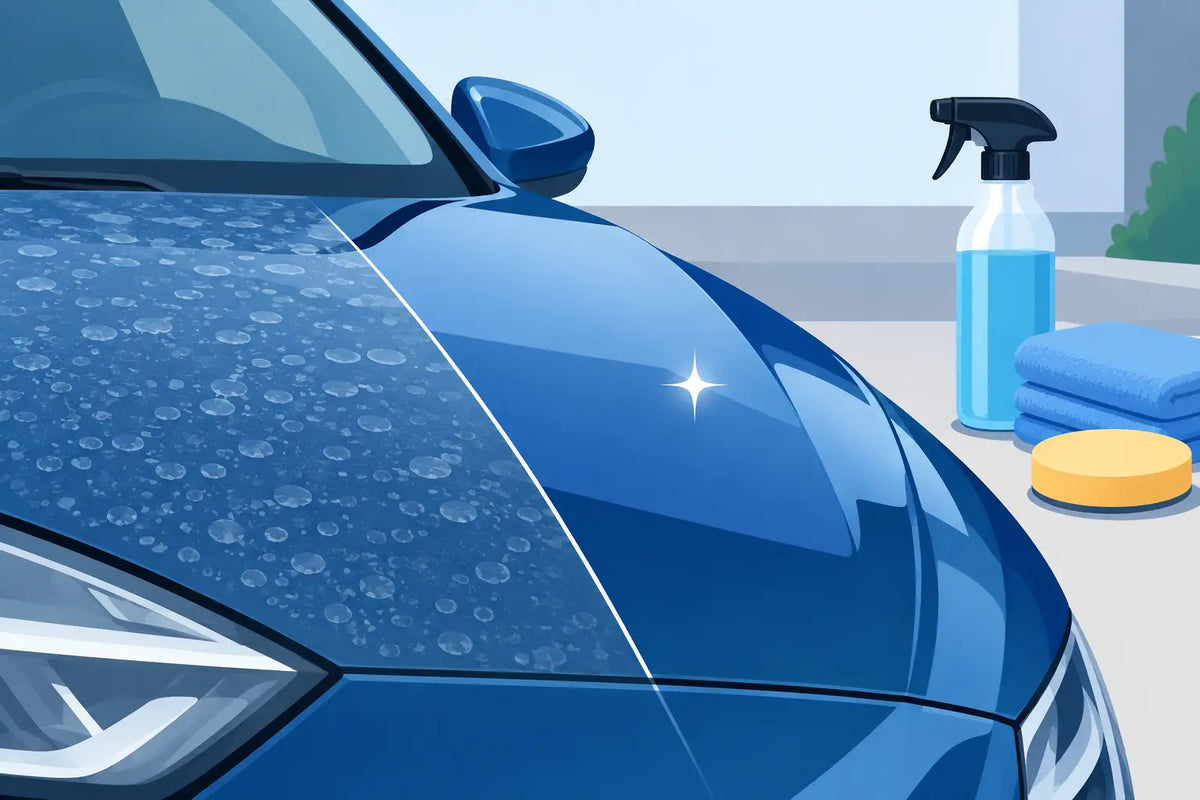
A freshly washed car can look worse than a dirty one when mineral deposits dry across the bonnet, glass and gloss black trim. The temptation is to attack them with a strong cleaner or heavy pressure. That is how minor spotting becomes damaged clear coat. To remove water spots safely, identify what is sitting on the surface before choosing a chemical or abrasive response.
Water spots are not all the same. Some are loose mineral residue that will release with the right wash process. Others have baked into contamination layers or etched into the clear coat. Treat every mark as etching and you waste time. Treat etched marks as surface residue and you risk chasing them with increasingly aggressive chemicals. Precision first. Correction second.
What water spots actually are
Most water spots begin with hard water. As droplets evaporate, dissolved calcium, magnesium and other minerals remain behind. Rainwater can also carry airborne fallout, especially in built-up areas, while sprinkler water is often exceptionally mineral-heavy. Heat accelerates the problem because it evaporates the water quickly and concentrates deposits at the edge of each droplet.
At the earliest stage, the deposit is on top of the protection layer, paint, glass or trim. It may feel slightly rough and appear as a pale ring or chalky mark. A mineral-removing product can dissolve it without mechanical force.
Leave it under strong sun or on a hot panel, however, and the deposit can affect the surface beneath. On paintwork, this can present as a dull circular outline that remains after washing. On glass, it can look like a cloudy haze. This is etching: the surface itself has been altered. Chemical removal may improve it, but it cannot replace material that has already been marked. That calls for controlled machine polishing or, in severe cases, professional assessment.
Protection changes the calculation. A ceramic coating, sealant or wax provides a sacrificial layer between minerals and paint, but it is not immune to spotting. Strong acidic cleaners used repeatedly can reduce hydrophobic behaviour and shorten the life of less durable protection. Use the least aggressive process that works.
How to remove water spots safely: start with a proper wash
Do not spot-treat a dusty panel. Wiping at a dry water mark drags grit across the paint and creates the fine scratches that show under inspection lighting. Work in shade, on cool panels, and begin with a thorough rinse.
Use a suitable pre-wash to loosen traffic film, then rinse again before contact washing with a pH-neutral shampoo and clean wash media. This removes the road grime that masks spotting and lets you judge the remaining marks honestly. Dry the vehicle promptly with a clean, high-quality drying towel. Blot or draw the towel across the panel with minimal pressure rather than grinding it into the surface.
If the marks disappear at this stage, stop. There is no benefit in escalating to a dedicated water spot remover simply because one is available. Good detailing is controlled restraint.
Match the chemical to the deposit
When marks remain after washing, use a purpose-made mineral deposit remover rather than household limescale products, vinegar mixtures or random acidic cleaners. Domestic products are formulated for bathroom ceramics, taps and grout, not automotive clear coat, delicate trim, polished metal or coating chemistry. Their strength, dwell behaviour and additives are not designed for vehicle surfaces.
A dedicated water spot remover is generally mildly acidic and designed to break down mineral deposits quickly. The exact safe dwell time depends on the formulation, the surface temperature and the severity of the spotting. Read the label, then test a small inconspicuous area first. This is not box-ticking. It tells you whether the mark is removable contamination, whether the protection is reacting as expected, and how quickly the product works on that particular vehicle.
Apply sparingly to a cool, clean section. A microfibre applicator or towel gives better control than flooding the panel. Allow only the stated dwell time, gently work the area if the instructions permit it, then rinse thoroughly. Never let an acidic product dry on the surface. On a warm black bonnet, seconds can matter.
Inspect after drying. If the spot has reduced but remains, repeat one controlled application before reaching for a stronger approach. Several short, rinsed applications are safer than one long dwell. The goal is to dissolve mineral residue, not prove how aggressive the chemical can be.
Glass needs its own judgement
Water spotting on glass can be stubborn because glass is hard, exposed and often neglected. It also reveals haze clearly in low sun and wet conditions. Start with a dedicated spot remover and clean glass thoroughly afterwards. If mineral deposits remain, a glass polish may be appropriate, but use a product specifically intended for automotive glass and follow its instructions.
Avoid using paint polish on windscreens. Some products can fill rather than correct, interfere with wiper performance, or create smearing in rain. Check the wiper blades too. Contaminated rubber can re-mark clean glass within minutes.
Treat trim and polished surfaces cautiously
Gloss black pillars, window surrounds, chrome-effect trims and uncoated plastics can all spot, but they do not all tolerate the same treatment. Textured plastics can hold product in their grain. Bare or ageing metal can stain. Polished aluminium may react differently again.
Use less product, reduce dwell time and rinse more generously on these areas. Never assume that a product safe for clear coat is automatically safe for every exterior material. If the vehicle has aftermarket paint protection film, vinyl wrap or sensitive matte paint, confirm chemical compatibility before starting. Matte finishes should not be polished to chase marks because polishing alters the uniform sheen that defines the finish.
When a water spot remover is not enough
A mark that remains perfectly circular after cleaning is often etched. Run a clean finger lightly across it. If it feels smooth but still looks dull or ghosted, the damage is likely below the contamination layer. More acid will not restore gloss. It may only stress the protection sitting above it.
At this point, assess paint thickness, panel history and finish type before polishing. A light finishing polish may refine shallow etching in clear coat, but there is always a trade-off: polishing removes a measured amount of material. On a well-maintained vehicle with healthy paint, that may be entirely reasonable. On thin, previously corrected paint or sharp edges, it may not be.
Professionals should inspect under proper lighting, use a paint depth gauge where appropriate and start with the least aggressive pad and polish combination. Enthusiasts without machine-polishing experience are usually better served by improving the mark chemically, protecting the surface and seeking help for isolated severe etching. There is no prize for turning a water spot into a strike-through.
Protect the finish after spot removal
Once deposits are removed, restore the surface protection. Spot removers can affect the behaviour of waxes and sealants, particularly if the deposits were heavy or multiple applications were required. A ceramic coating should not be stripped by a correctly used, coating-safe cleaner, but its water behaviour may be temporarily altered until the surface is fully rinsed and dried.
Use a suitable protection product for the finish and allow it to cure as directed. Liquid Laboratories products are built around this logic: clean contamination accurately, then apply protection with a clear purpose rather than layering products at random. The best protection choice depends on the vehicle's use, storage and maintenance routine, not the loudest durability claim on a label.
Stop water spots returning
Prevention is faster than removal. Do not let rinse water sit on hot panels, especially in direct sun. Wash early or late in the day where possible, work one section at a time, and dry immediately with clean towels. If your supply is hard water, a filtered final rinse or de-ionised water setup makes a genuine difference, particularly for professional studios handling dark paint and glass-heavy vehicles.
Keep drying towels clean and retire them when they lose absorbency. A tired towel encourages repeated passes and pressure. Also avoid parking under sprinklers, and remove bird mess, rain residue and fresh hard-water spots quickly before heat has time to turn a maintenance issue into correction work.
The right response to water spots is rarely more force. Clean the vehicle, identify the mark, use targeted chemistry, rinse properly and stop once the surface is clear. That is how gloss stays intact and protection keeps doing its job.
Share:
Polish Versus Compound: Which Comes First?
Car Polish Review for Real Paint Correction