

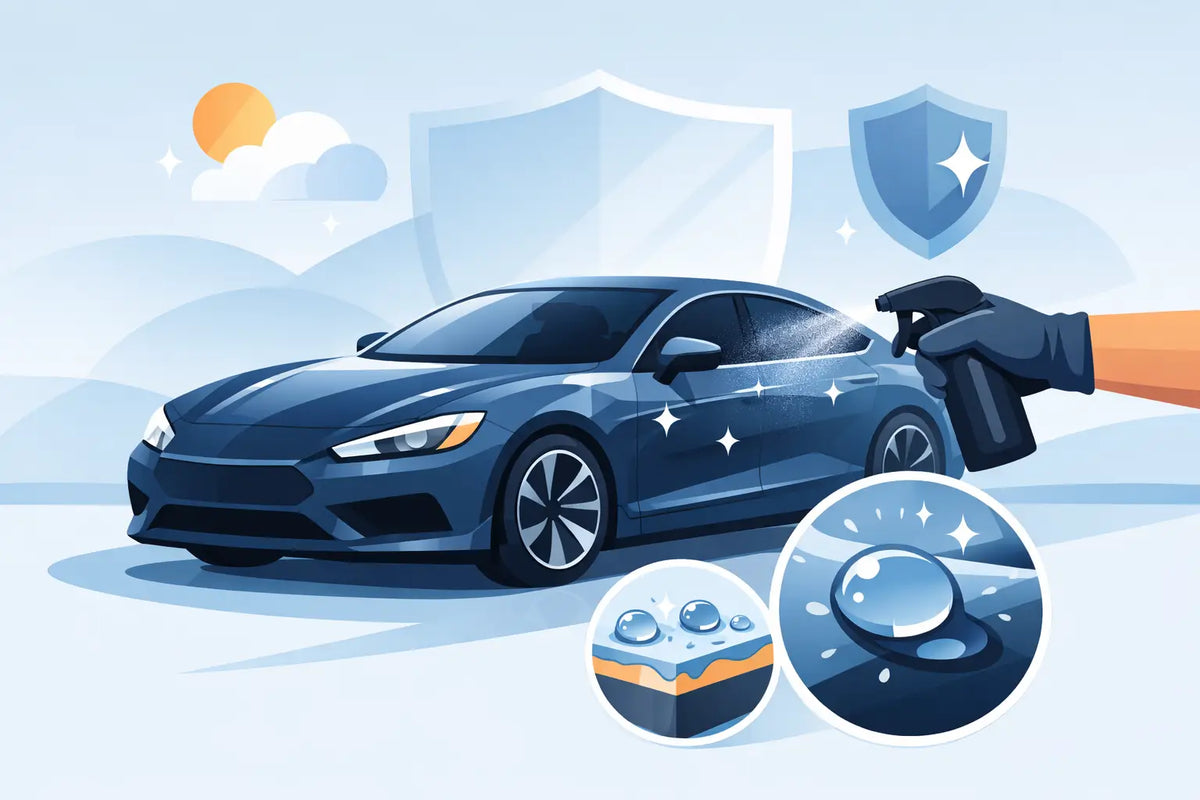
A ceramic coating can make a properly prepared car easier to wash, harder to contaminate and noticeably glossier for years rather than weeks. But is ceramic coating worth it for every car owner? No. The coating is only as good as the paintwork beneath it, the preparation behind it and the maintenance that follows.
This is where the marketing noise needs removing. Ceramic coating is not a force field. It will not stop stone chips, prevent every wash mark or excuse poor wash technique. It is a chemically resistant, durable sacrificial layer designed to keep the vehicle cleaner, protect the clear coat from contamination and make routine maintenance more efficient. Used properly, it is serious protection. Applied badly, it is an expensive way to lock defects into place.
What a ceramic coating actually does
A quality ceramic coating cures into a thin, hard, chemically resistant layer bonded to the vehicle’s painted surface. Most professional-grade formulations use silicon-based chemistry to create a hydrophobic surface with high surface tension. Water beads, road film releases more easily and bonded contaminants have less opportunity to cling to the paint.
The practical benefit is not simply water beading. Beading looks good, but low dirt adhesion and chemical resistance are what make a coating worthwhile over time. Traffic film, bird droppings, tree sap, bug residue and winter grime are easier to remove when they are dealt with promptly. That means less aggressive washing, fewer harsh chemicals and a better chance of preserving the finish.
Coatings can also deepen gloss, particularly on dark colours, metallic paint and well-corrected panels. They do not create gloss from nowhere. A dull, swirled surface will still be a dull, swirled surface beneath a highly water-repellent layer.
Is ceramic coating worth it? Start with the paint condition
The biggest variable is preparation. A ceramic coating does not correct paint. It preserves the condition it is applied over.
On a new vehicle, this may mean a thorough wash, fallout removal, tar removal, clay treatment where needed and a light machine polish to remove dealer-installed marring. On an older car, proper preparation may involve paint correction to reduce swirl marks, oxidation, scratches and haze before protection begins. The more correction required, the more labour sits behind the final price.
This is why a cheap coating package can be a false economy. If the paint has not been properly decontaminated, polished and panel-wiped, the coating may bond inconsistently or seal in defects that should have been removed first. Durability claims mean very little if the foundation is compromised.
For professionals, this is equally relevant to process control. Do not treat coating application as the main event. Inspection, correction, solvent preparation, controlled application and cure conditions determine the result. The bottle is one part of the system.
What ceramic coating will not do
Hardness claims are regularly misunderstood. A 9H claim normally refers to pencil hardness testing, not the ability to resist real-world scratches, car park damage or stone impacts. A coating may offer better resistance to light wash-induced marring than unprotected clear coat, but it is not paint protection film.
It will not stop stone chips. It will not make an automatic car wash safe. It will not remove the need to wash the car, and it will not prevent water spotting if mineral-rich water is left to dry in direct sun.
Think of a coating as a maintenance and contamination-management tool. It reduces the punishment your paintwork takes during normal ownership. It does not make the vehicle indestructible.
If impact resistance is the priority, paint protection film is the more appropriate answer for high-risk areas such as the front bumper, bonnet leading edge, wing mirrors, sills and rear arches. Many high-value vehicles benefit from both: film where impacts occur, ceramic coating over protected paint and film for easier cleaning and a uniform finish.
The real cost is preparation, not just the coating
Ceramic coating pricing varies sharply because the work varies sharply. A quick application on lightly cleaned paint is not comparable with a multi-stage correction and coating service carried out indoors under controlled lighting.
A professional installation can cost several hundred pounds and, for larger vehicles or correction-heavy work, significantly more. That figure should cover assessment, safe washing, decontamination, polishing where agreed, surface preparation, coating application and cure management. If it does not, ask exactly what is being omitted.
For a committed enthusiast, a DIY coating can offer excellent value. The material cost is lower, and modern formulations can be forgiving when used with disciplined preparation. The trade-off is time, technique and risk. High spots, uneven coverage and poor levelling can leave visible marks that need machine polishing to remove.
DIY makes sense when you can work indoors or in a clean, dry sheltered space, understand paint preparation and are willing to follow flash times precisely. It makes less sense on a neglected vehicle, in poor weather or when the owner expects a first attempt to deliver professional-level correction.
Durability depends on use, not the number on the label
A quoted durability period is a controlled-performance target, not a warranty against British roads, winter salt, poor wash methods and neglected contamination. A daily-driven vehicle parked outside will have a different coating life from a weekend car kept in a garage.
Mileage, wash frequency, shampoo strength, exposure to industrial fallout and how quickly bird droppings are removed all matter. So does the surface itself. Horizontal panels take more UV exposure and fallout than vertical panels. The front end faces more traffic film. Door shuts and lower sections collect grime that can reduce hydrophobic behaviour if maintenance is weak.
The right question is not, “Will this last five years?” Ask, “Will this reduce maintenance and preserve the finish for long enough to justify the preparation and cost?” For many owners, that answer is yes. For a car being sold in six months, perhaps not.
A coated car still needs correct maintenance
Ceramic protection works best when the maintenance routine supports it. Use a thorough pre-wash to soften and remove loose grime before contact washing. Follow with a quality pH-neutral shampoo, clean wash media and a safe two-bucket or multiple-mitt approach. Dry the vehicle properly rather than allowing mineral deposits to bake onto the surface.
Avoid treating hydrophobicity as the only health check. A coating can still be present when water behaviour appears muted because traffic film, mineral deposits or oils are masking the surface. A periodic decontamination wash can restore performance without stripping the coating.
Do not repeatedly attack a coated car with strong alkaline cleaners, harsh fallout removers or abrasive products simply because the label says the coating is durable. Chemical resistance is useful headroom, not a reason to be careless. Use the least aggressive method that gets the job done.
For detailers, handover matters. Give clients a simple maintenance plan, not a vague promise that the car is protected forever. The best coating job can be undermined by one week of brush-wash abuse.
When ceramic coating is a strong investment
Ceramic coating earns its place when the owner values paint condition, washes the vehicle correctly and intends to keep it long enough to benefit. It is particularly effective on daily drivers that face motorway grime, winter salt and frequent washing, as well as cherished cars where finish quality matters.
It also makes commercial sense for detailers when the process is controlled and the product is consistent. A coating service should be built around repeatable prep, measured application and clear client expectations. Liquid Laboratories takes the same view: chemistry should support the workflow, not become another exaggerated claim.
The return is less about dramatic social-media beading and more about reduced wash effort, better appearance between washes and a finish that is easier to keep right.
When you should choose something else
A ceramic coating may not be the right answer if the budget is tight, the car is already heavily neglected or the owner uses automatic brush washes. A good sealant or spray protection can be the more sensible option. It costs less, applies faster and can still provide meaningful gloss, water behaviour and short-term contamination resistance.
Likewise, if the primary concern is chips and physical damage, put the budget towards paint protection film on the vulnerable areas. If the vehicle is being sold shortly, a proper enhancement polish and durable sealant may deliver a better return than a long-term coating.
The best protection is the one that matches the car, its use and the owner’s maintenance habits. Choose a coating when you are prepared to protect the finish properly from day one, then keep that standard going. That is where the value lives.
Share:
Can Ceramic Coatings Fail? Causes and Prevention
How to Clean Car Interiors Without Causing Damage