
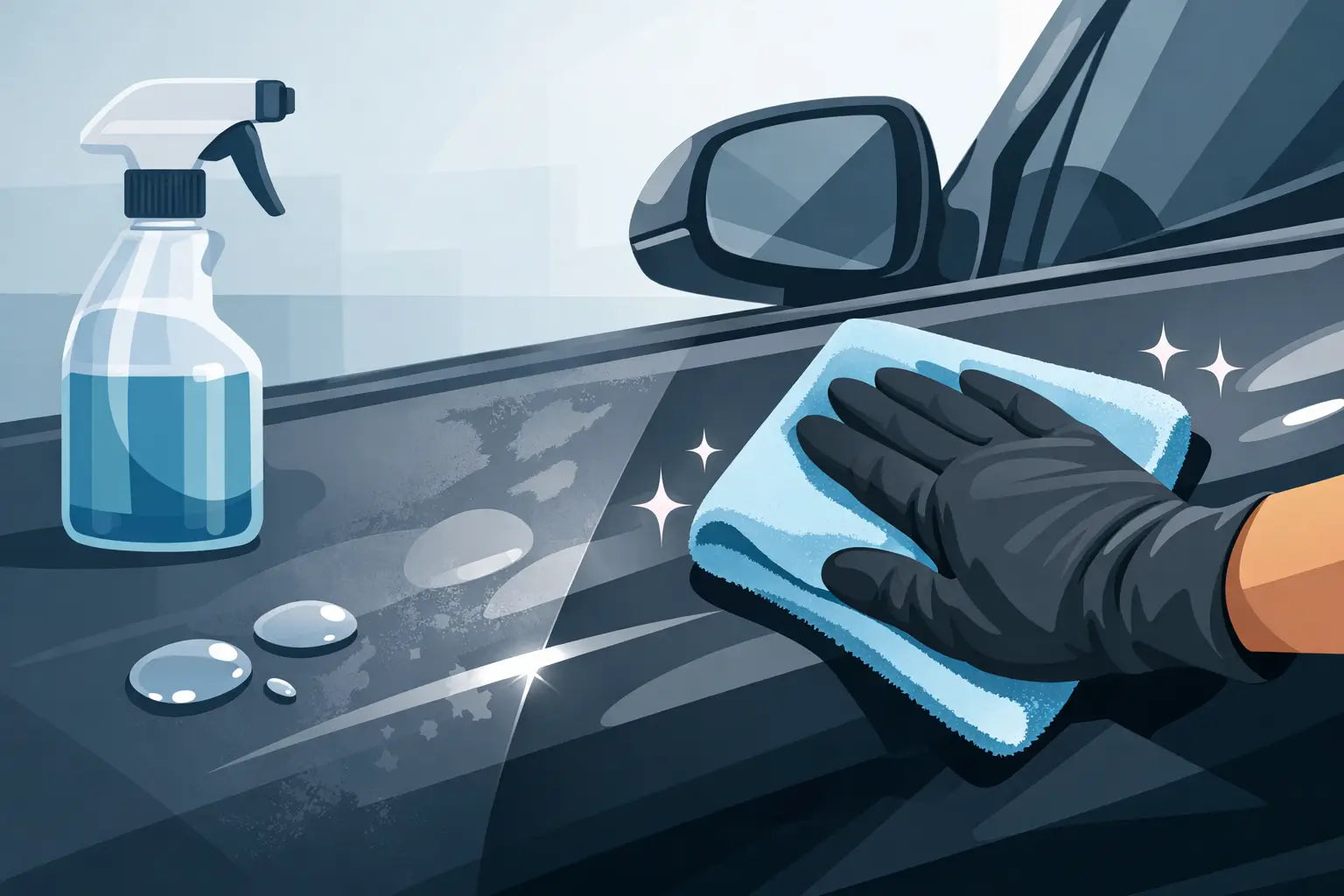
A coating only gets one chance to bond properly. If polishing oils, fillers, surfactants or light residue are still sitting on the paint, you are not applying protection to bare substrate - you are applying it to contamination. That is exactly why panel wipe for coating prep matters.
This step gets treated as basic, but it is one of the easiest places to lose performance without realising it. A coating can still flash, level and look good on the day, then disappoint later with patchy behaviour, weak water beading or reduced durability. The problem is rarely dramatic. More often, it is just enough residue left behind to compromise the bond.
What panel wipe for coating prep actually does
At its core, a panel wipe is a solvent-based cleaner designed to remove residues left after correction and prep stages. That usually means polishing oils, lubricants, carrier solvents, dust, fingerprints and any light contamination introduced while handling the vehicle. The objective is simple - expose a genuinely clean surface before the coating goes down.
That sounds obvious, but not every residue behaves the same way. Some compounds leave obvious oils that smear under a towel. Others use finer lubricants and fillers that are harder to spot, especially under workshop lighting. A proper panel wipe breaks those residues down so they can be lifted away rather than pushed around.
This is the difference between a surface that looks clean and one that is chemically ready. For a ceramic coating, that difference matters.
Why coatings fail when prep is rushed
A lot of coating issues get blamed on the product. Sometimes fairly. Often not. Prep is usually the bigger variable.
If the paint still carries polishing residue, the coating may struggle to anchor evenly across the panel. You can end up with inconsistent curing, awkward high spots, poor hydrophobic behaviour or early drop-off in real-world use. On softer paints, the issue can be even harder to spot because residue and marring can mask each other.
It also depends on what came before the wipe-down. If the car has only been washed and decontaminated, your panel wipe job is relatively straightforward. If it has been compounded, refined and then handled between stages, there is more to remove and more chance of cross-contamination from towels, hands and airborne dust.
That is why disciplined prep tends to outperform rushed prep, even when the same coating is used.
When to use panel wipe for coating prep
The right time is after correction is complete and before coating application. In some cases, it is also worth using between polishing stages when you want to check the true finish and confirm defects are actually removed rather than temporarily filled.
For coating work, the final wipe is the key one. You want the paint cool, dry and free from fresh contamination. If you wipe down too early and then keep touching the car, moving lights, opening doors or leaning across panels, you are reintroducing oils and contact marks before the coating even comes out.
Good workflow beats extra effort. Finish correction, blow out dust, inspect properly, then carry out your final panel wipe and move straight into coating application.
Not all panel wipes are equal
This is where a lot of confusion starts. People talk about panel wipe as if it is one universal thing. It is not.
Some formulas are tuned to cut heavier polishing oils quickly. Some are milder and safer on sensitive finishes but may need more passes. Some evaporate very fast, which can be useful in controlled conditions but awkward in warmer environments. Others stay wet longer and give you more working time, but can punish over-application if you flood the panel.
There is also a difference between a product designed specifically for coating prep and a general solvent cleaner used as a substitute. They can overlap, but they are not automatically interchangeable. A coating-prep panel wipe should clean effectively without leaving its own residue behind or creating unnecessary risk on fresh correction work.
That is the chemistry-first view. Strip what needs stripping, leave nothing behind, and do it without adding drama.
How to use it properly
Technique matters as much as product choice. Spraying half a bottle onto a bonnet and chasing it with a tired microfibre is not prep. It is guesswork.
Start with clean, dry paint in a controlled environment. Work one section at a time. Lightly apply product to either the panel or the towel, depending on the formula and panel size, then spread it evenly and wipe with a clean microfibre. Follow immediately with a second dry or low-pile towel to lift the dissolved residue away.
The second towel matters. If you only use one towel, there is a risk you are just redistributing softened oils rather than removing them fully. On lower temperatures this may be less obvious. In warmer workshops or on dark paint, it tends to show up fast as smearing.
Turn towels frequently. Swap them out before they become loaded. If the towel feels damp, drags, or starts streaking, it is done for that stage.
How much product should you use?
Enough to wet the surface lightly, not soak it. Overuse creates its own problem because excess solvent can flash unevenly and smear. Underuse can leave heavier residues untouched. The sweet spot is controlled coverage with an immediate wipe-off.
If a panel still smears after the first pass, that does not always mean the product is weak. It may simply mean there is more residue present than expected. Repeat the process with fresh towels rather than trying to force one pass to do everything.
Which towel is best?
Short-pile or tight-weave microfibres are usually the safer choice for this stage. They give better bite on residue and are less likely to just skate over oils. Plush finishing towels have their place, but for coating prep they can be too soft and too absorbent, especially if residue load is high.
The towel also needs to be genuinely clean. Fabric conditioner, detergent residue or old dressing transfer can undermine the whole point of the wipe-down.
Common mistakes that cost coating performance
The most common mistake is assuming the panel is clean because it looks glossy. Gloss proves very little at prep stage. Oils can make paint look better than it really is.
The second mistake is using panel wipe in dirty conditions. If compounding dust is still sitting in shuts, badges, trim edges or panel gaps, it will keep finding its way back onto the paint. Blow out the vehicle first. Wipe-down should happen after the dust is under control, not while it is still floating around the bay.
Another frequent issue is working in direct heat or on warm panels. Solvents flash too quickly, smearing increases and consistency drops. Cool paint is easier to prep properly.
Finally, there is the temptation to replace proper wipe-down with an IPA mix made on the fly. Sometimes it works well enough. Sometimes it does not. Homemade ratios, water quality and additive content all change the result. If coating performance matters, guesswork is a poor standard.
Do you always need it?
In most serious coating installs, yes. There are niche cases where a coating system is designed around its own dedicated prep stage or cleaner, and that should always take priority over generic advice. But if you have corrected paint and want the best chance of a proper bond, a final panel wipe is standard practice for good reason.
There is a trade-off, though. On extremely delicate finishes, aggressive wiping can induce marring. That does not mean skipping prep. It means adapting your technique - softer pressure, cleaner towels, smaller sections and a formula suited to the paint system.
Good detailing is rarely about doing less. It is about doing the right amount, with control.
The detailers who get this right are boring on purpose
That is not an insult. It is a compliment.
Reliable coating prep is built on repeatable habits, not theatre. Clean pads, fresh towels, proper lighting, controlled wipe-down, disciplined handling and no guessing. The detailers and enthusiasts who get the best long-term results are usually the ones who treat prep as process rather than personality.
That approach sits at the heart of proper chemical design too. Liquid Laboratories is built around that same idea - no inflated claims, no lifestyle fluff, just chemistry made clear.
If you want a coating to perform like a coating should, stop looking at panel wipe as the quick final spray before the interesting part. It is part of the install, and it deserves to be treated that way. Clean surface, clean bond, cleaner result.
Share:
Clay Bar Before Ceramic Coating?
How to Maintain Ceramic Coating Properly