
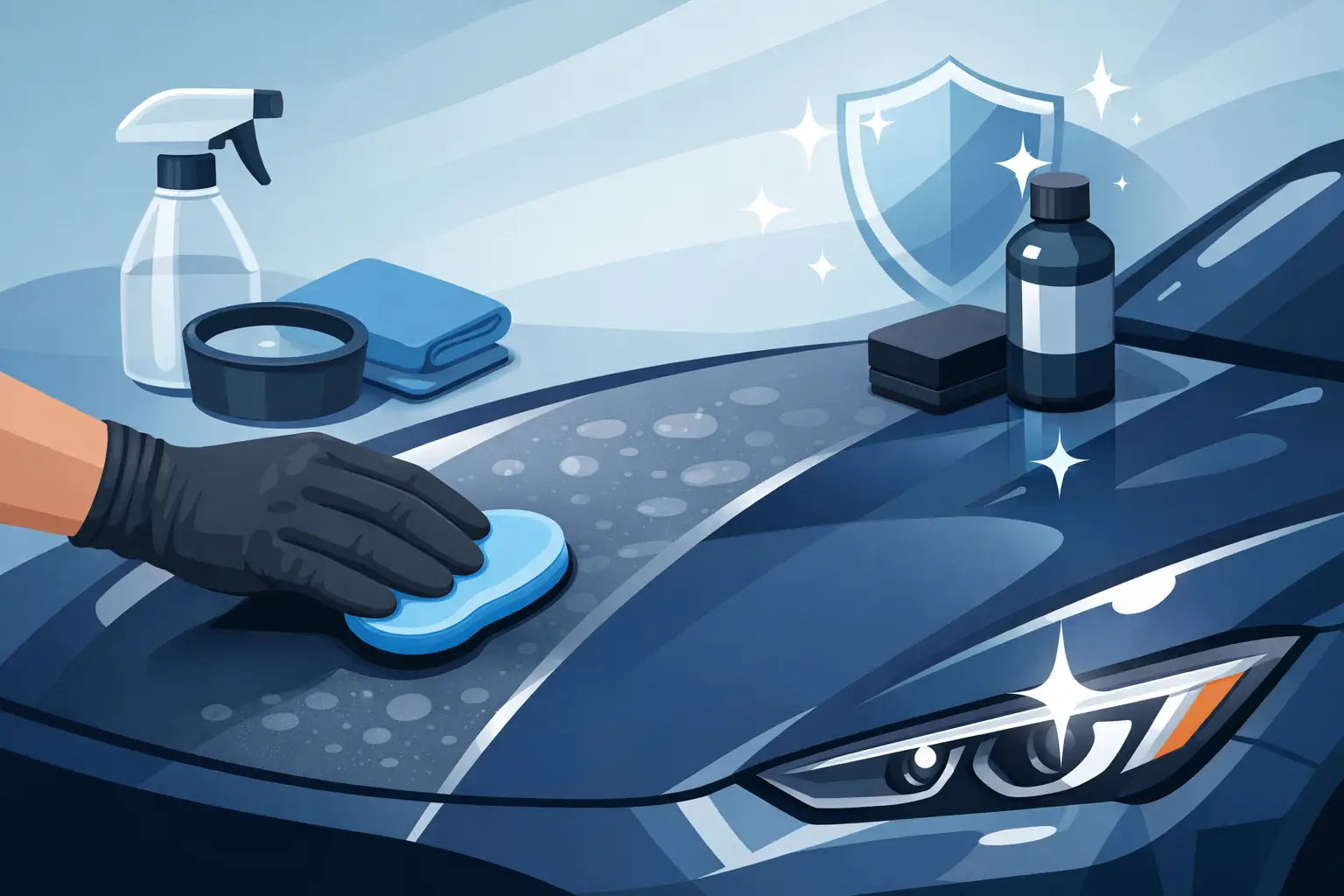
If you are about to coat paint that feels smooth enough by hand, it is tempting to skip the clay stage and move straight to panel wipe and ceramic. That is usually where problems start. Using a clay bar before ceramic coating is not about tradition or box-ticking. It is about removing bonded contamination that washing and chemical decontamination can leave behind, so the coating bonds to clean paint instead of whatever is stuck on top of it.
Do you need a clay bar before ceramic coating?
Most of the time, yes. Not every car needs aggressive claying, but every car needs the paint assessed properly before coating. Ceramic coatings are thin, hard, and designed to bond directly to the substrate. If fallout, overspray, tar residue, industrial contamination or old traffic film remains on the surface, the coating is bonding to contamination first and paint second. That affects durability, slickness and finish quality.
The mistake is assuming a clean-looking car is a decontaminated car. Visual cleanliness means very little at coating stage. Paint can look sharp and still feel rough once you run a hand across it in a thin glove or inside a plastic bag. That texture is bonded contamination. If it is left in place, you are sealing it in.
There is a trade-off, though. Claying can introduce marring, especially on softer clear coats or if the process is rushed. That does not mean skip it. It means choose the least aggressive method that gets the surface genuinely clean.
What a clay bar actually removes
A proper wash removes loose dirt. Fallout removers and tar removers deal with specific contamination chemically. A clay bar handles what is still mechanically bonded to the paint after that.
That can include rail dust, brake dust particles, paint overspray, tree residue, stubborn environmental fallout and general embedded contamination that sits proud of the clear coat. These particles interfere with how a coating lays down and cures. Even if the coating appears to flash correctly, the bond can be compromised.
This matters even more on daily drivers and trade vehicles that live outside. Cars exposed to motorway fallout, industrial areas, hard water and winter road contamination usually need more prep than owners expect. A garage-kept weekend car may need very little. A fleet car used every day may need full decontamination and machine correction before coating is even worth considering.
When chemical decontamination is enough
There are cases where a full clay stage is not necessary. If the vehicle is new, transport film has been properly removed, the paint has had iron and tar treatment, and the surface checks out genuinely smooth, you may only need a very light clay mitt pass or no mechanical decontamination at all.
That is the key point. The decision should come from inspection, not habit. Overworking paint for no reason is poor process. Underprepping paint before applying a ceramic is worse.
A chemistry-first workflow is always the right starting point. Wash first. Use fallout remover where needed. Use tar remover where needed. Reassess the surface. If bonded contamination remains, then clay. That keeps abrasion down and preserves as much of the finish as possible before polishing.
Clay bar before ceramic coating and paint correction
In real-world detailing, clay is rarely the last prep step before coating. Most coated vehicles benefit from some level of polishing after claying, even if it is only a refining pass.
Why? Because claying can leave micro-marring. On lighter colours that may be hard to see. On black, navy, red and softer clears, it often shows immediately under inspection lighting. If you coat over that, you lock those defects under a hard layer that is designed to stay put.
For professionals, this is standard workflow. Decontaminate, clay if required, machine polish as needed, then panel wipe, then coat. For enthusiasts, the temptation is often to save time and skip correction. That depends on the car, the clay media used and the standard you want. If you are coating a daily and chasing protection rather than concours finish, a very mild clay process with minimal marring may be acceptable. If you want maximum gloss and clarity, polishing after clay is the smarter move.
How to clay properly before coating
The process is simple, but the margin for error is smaller than many people think.
Start with a full safe wash. Pre-wash first, then contact wash with a pH-neutral shampoo. Rinse thoroughly. Follow with chemical decontamination to remove iron fallout and tar. Only then should you decide whether the surface still needs claying.
Use plenty of lubrication. Dedicated clay lubricant works well, but some detailers use a suitable shampoo solution depending on the clay media and conditions. The goal is the same - reduce friction and let the clay glide, not drag.
Work one small section at a time with light pressure. You are not scrubbing a floor. Let the clay pick up contamination gradually. As the surface clears, resistance drops and the clay starts to move more freely. That is your sign to stop, not keep rubbing for the sake of it.
Check the clay regularly. If it becomes dirty, fold it to expose a clean face. If it is dropped, bin it. No debate. Grit embedded in clay will mark paint quickly.
Once the vehicle is clayed, rinse or wipe down as required and inspect the finish. If there is any marring, haze or loss of clarity, polishing should follow. Only once the paint is clean and corrected should you move to panel preparation and ceramic application.
Choosing the right clay media
Not all clay is the same, and this is where many avoidable defects happen.
A traditional fine clay bar is usually the safest place to start for paint that only has light bonded contamination. Medium and heavy grades remove more contamination faster, but they also raise the risk of marring. On neglected paint, that trade-off can be worth it. On softer or well-kept finishes, it often is not.
Clay mitts, pads and towels are faster and useful in trade environments where efficiency matters, but they can be more aggressive depending on the product and technique. They are not automatically worse. They just need the same judgement. Fast is only better if the finish still meets the standard.
For serious enthusiasts and professionals alike, the rule is straightforward: use the least aggressive option that gets the panel clean. That gives you a better finish, less polishing, and less unnecessary clear coat removal.
Common mistakes when using a clay bar before ceramic coating
The biggest mistake is claying dirty paint. If the wash stage is weak, the clay ends up dragging leftover dirt across the panel. That is not decontamination. That is damage.
The second is skipping chemical decontamination and expecting clay to do everything. Clay should not be your first line of attack against tar and fallout. Use chemistry where chemistry works best, then use mechanical decontamination only for what remains.
The third is using too much pressure. If contamination is not coming away, the answer is usually more lubrication, a second chemical step, or a different clay grade - not brute force.
Another common mistake is going straight from clay to coating without proper inspection. If the surface is marred, oily, or carrying residue from lubricant or previous products, coating performance can drop. Bonding matters. Cure behaviour matters. Prep dictates both.
Is clay always worth it before a ceramic coating?
If the paint is contaminated, absolutely. If it is genuinely clean after chemical decontamination, maybe not. That is the honest answer.
Ceramic coatings reward disciplined prep and expose lazy prep. There is no trick around that. A coating applied to properly decontaminated paint will generally bond better, look sharper and last closer to its claimed performance window. A coating applied over bonded contamination may still bead, but that does not mean the job was done properly.
This is exactly why experienced detailers work to a process rather than a guess. Inspection first. Chemistry where possible. Mechanical decontamination where necessary. Correction if required. Then coating.
For anyone building a reliable workflow, that is the standard. It is also the reason brands like Liquid Laboratories focus on system-led detailing rather than hype. Results come from process, not wishful thinking.
If you are investing the time to ceramic coat a vehicle, prep the surface to a standard that justifies the coating. The gloss you see on day one matters, but the bond you cannot see is what decides whether the job still performs months down the line.
Share:
Fallout Remover for Cars: What It Really Does
Panel Wipe for Coating Prep Explained