

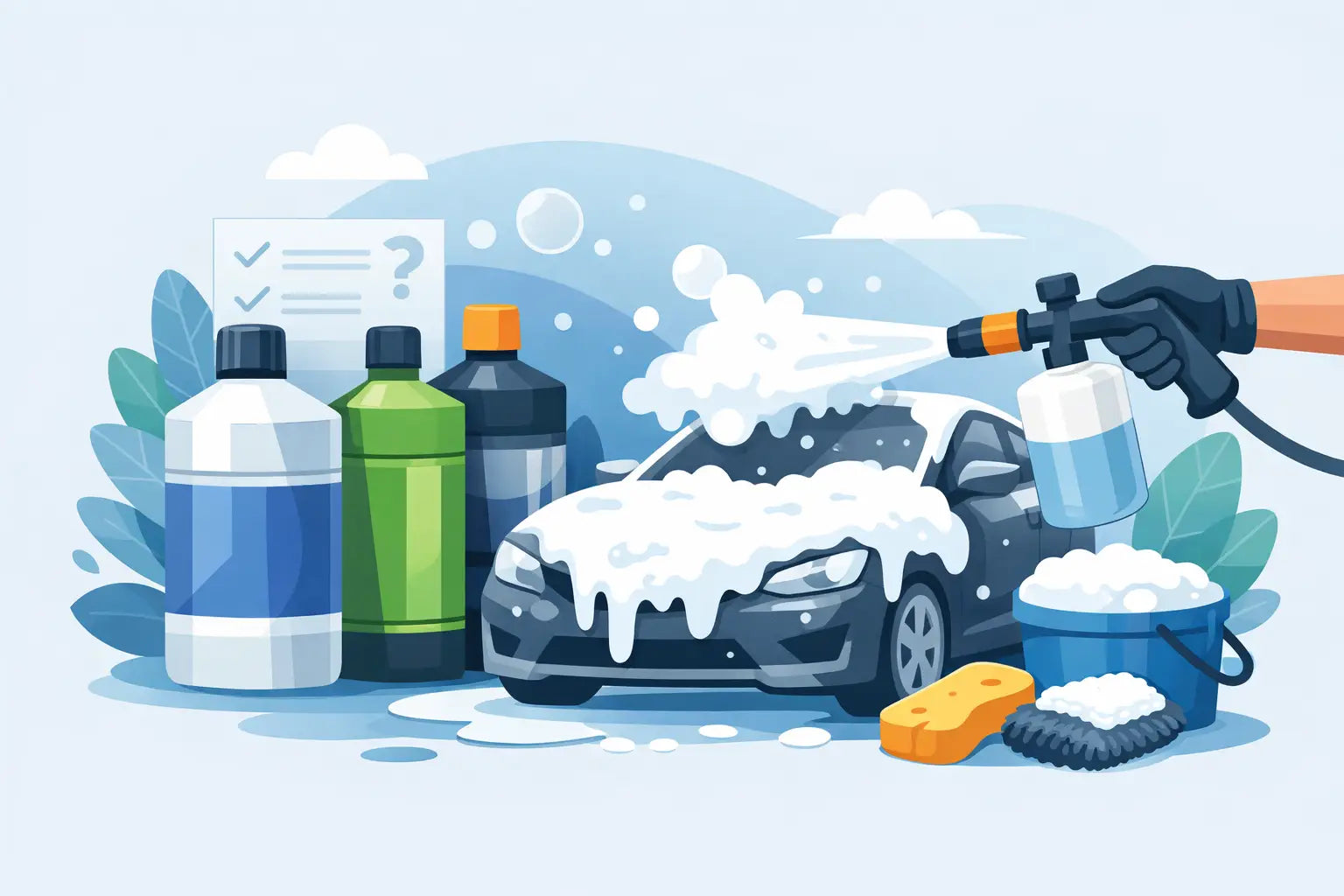
Most snow foams look impressive for about thirty seconds. That is exactly why plenty of buyers choose the wrong one.
If you want to know how to choose snow foam properly, stop judging it by shaving-cream thickness alone. The real job of a snow foam is to soften, loosen and carry away dirt before contact washing. That means chemistry matters more than theatrics. A product that clings well but barely cleans is not helping your wash process. It is just putting on a show.
What snow foam is meant to do
Snow foam sits in the pre-wash stage. Its purpose is simple - reduce the amount of bonded and loose grime still sitting on the paint before your mitt touches the surface. Done properly, that means fewer swirl marks, lower marring risk and a safer wash overall.
That also means one awkward truth. Snow foam is not always meant to do all the heavy lifting on its own. On a lightly dirty car, a good foam may remove a useful amount of contamination before rinse-off. On a winter daily with road film, salt and traffic grime, even a strong foam may need support from a dedicated pre-wash or citrus cleaner. Anyone promising one product does everything is selling hype, not process.
How to choose snow foam for your wash routine
The right product depends on what you are trying to protect, how dirty the vehicle gets, and how often you wash it. There is no single best snow foam for every car, every month, and every owner.
If you maintain a coated weekend car and wash it regularly, a pH neutral formula usually makes the most sense. It gives you a safer maintenance wash, good lubrication at the pre-wash stage and less risk of interfering with waxes, sealants or ceramic coatings. You are not chasing aggression. You are chasing controlled cleaning.
If you work on neglected vehicles, commercial fleets or winter-driven daily drivers, cleaning power becomes more important. In those cases, an alkaline or stronger pre-wash foam may be the better tool. The trade-off is obvious - more bite can mean less friendliness to existing protection if used too often or too strong. That is not a flaw. It is just chemistry.
Start with pH, not marketing
The quickest way to narrow your choice is by pH.
pH neutral snow foam
A pH neutral snow foam is usually the right option for maintenance washing. It is generally safer on waxes, sealants and ceramic-coated vehicles, and it suits enthusiasts who wash often enough that heavy contamination never gets out of hand.
That said, pH neutral does not automatically mean effective. Some products are so mild they produce decent foam but poor cleaning. The better formulas balance dwell, surfactant performance and rinse behaviour without relying on harshness.
Alkaline snow foam
An alkaline snow foam is aimed at stronger grime removal. It is more suitable for winter road film, neglected paintwork, wheel arches, lower panels and commercial use where speed matters and perfection starts with stripping away more contamination up front.
The compromise is protection sensitivity. Used too frequently, too strong, or left on too long, it can reduce the life of weaker waxes and some sealants. For professionals and serious enthusiasts, that is not a reason to avoid it. It is a reason to use it deliberately.
Thick foam is not the target
Foam thickness sells bottles. Cleaning ability protects paint.
A dense blanket can help with dwell time because it slows run-off and keeps active ingredients on the surface for longer. But thick foam by itself means nothing if the surfactants are weak or the dilution is inefficient. Some of the most photogenic products are mediocre cleaners. Some of the best working products produce a less dramatic foam but break down traffic film more effectively.
When judging performance, look at what the panel looks like after rinse-off, not what it looked like in the lance. If dirt is still sitting heavily on the lower doors and rear end, the foam has not done enough.
Dwell time matters more than most people think
A good snow foam needs enough dwell time to work on contamination before it slides off. That does not mean leaving it to dry. It means using a product that clings sensibly in the conditions you are washing in.
Warm weather, direct sun and windy conditions shorten dwell dramatically. In those cases, a foam that behaves well in a cool workshop may underperform on a driveway. This is where experienced users look beyond label claims. Real-world performance matters. A reliable foam should hold long enough to soften grime but rinse clean without stubborn residue.
If you are a trade user, consistency here is vital. You do not want a foam that behaves one way at 8am and another at midday just because the panel temperature moved.
Dilution rate tells you a lot
How to choose snow foam often comes down to value as much as raw performance. A bottle that looks cheaper can cost more per wash if it needs a heavy dose to achieve average results.
Pay attention to recommended dilution in the lance bottle and how the product behaves through your specific setup. Snow foam performance changes with water hardness, pressure washer output, lance quality and vehicle size. A concentrated formula that still performs at sensible ratios is usually the smarter buy, especially for professionals managing cost per job.
Cheap foam with weak concentration is rarely cheap in use. It disappears quickly, underperforms on dirt and forces you to use more product to chase the same result.
Compatibility with protection is not optional
If the vehicle wears wax, sealant or ceramic protection, your snow foam should fit that system rather than fight it.
For coated cars, choose a maintenance foam that cleans without leaving gloss enhancers, unnecessary residues or ingredients that mute hydrophobic behaviour. A proper rinse should leave the surface clean and ready for contact wash, not artificially dressed.
For unprotected or workhorse vehicles, you may prioritise stronger cleaning over preservation. That is a valid choice. The key is matching the chemistry to the job. Too mild and you waste time. Too aggressive and you shorten the life of protection you paid for.
Water behaviour and rinse quality
One detail that separates average snow foam from a genuinely good one is rinse behaviour. After dwell, the product should rinse freely and carry contamination away without smearing or leaving behind sticky surfactant residue.
Poor rinse quality can interfere with the wash stage, especially on coatings where you want a clean read on beading and sheeting. It can also leave patchiness on glass and trim if the formula is overloaded with cosmetic extras. Again, less theatre, more function.
Fragrance and colour should be low on your list
There is nothing wrong with a snow foam smelling good or looking bright in the bottle. But neither tells you anything useful about cleaning power, coating compatibility or rinse behaviour.
This is where buyers often get distracted. Snow foam has become a visual product category, which makes it easy for gimmicks to crowd out actual formulation quality. Serious detailing works the other way round. Start with chemistry, then decide whether the nice-to-have extras matter.
The best choice depends on the vehicle
A garage-kept sports car washed every fortnight needs a different approach from a diesel estate doing motorway miles through January. That should be obvious, yet many buyers still look for one all-purpose answer.
For regular maintenance, choose a pH neutral foam with stable dwell, strong surfactant action and clean rinsing. For heavier contamination, choose a stronger foam or pair a maintenance foam with a dedicated pre-wash stage. For trade work, prioritise repeatability, cost per wash and compatibility across different protection types.
That is the practical answer to how to choose snow foam. Match the product to the contamination level, the protection on the vehicle and the standard you are trying to hit.
What to avoid when buying snow foam
Avoid choosing on foam density alone. Avoid assuming pH neutral always means safe and effective, or that alkaline automatically means harsh and unsuitable. Avoid products that promise every benefit at once - maximum cling, maximum cleaning, maximum gloss, maximum protection support - because chemistry usually involves compromise.
A disciplined wash process beats marketing every time. The right snow foam should make the contact wash safer, not distract from it.
One reason serious users trust chemistry-led brands such as Liquid Laboratories is simple. Clear formulation logic beats inflated claims. You do not need a product to perform for social media. You need it to perform on paint.
The best snow foam is the one that fits your process, your water, your climate and your standards. Choose with that in mind, and your wash routine gets faster, safer and far more consistent.
Share:
Paint Protection Products That Actually Work
Car Detailing Workflow Guide That Works