

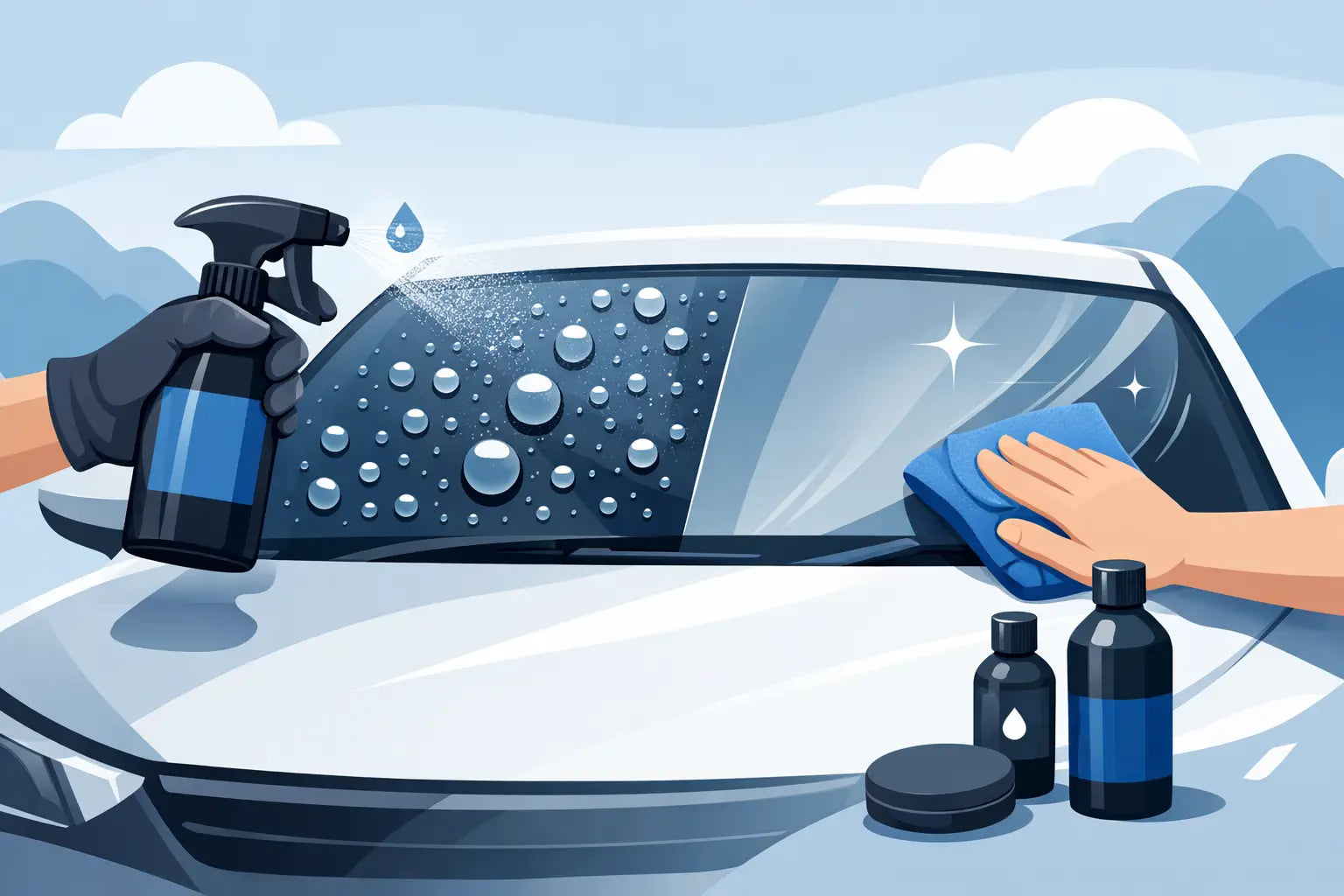
You notice bad glass protection the moment the weather turns. Wipers start dragging, road film sticks harder than it should, and motorway spray turns a routine drive into guesswork. A proper glass sealant for cars is not about showroom theatre. It is about cleaner glass, faster water evacuation and less effort every time the car is used.
That matters whether you are maintaining your own vehicle or prepping work for paying clients. Windscreens take constant punishment from traffic film, washer fluid, wiper abrasion, hard water spotting and whatever the British weather decides to throw at them next. If the product is weak, badly matched to the surface, or applied over contamination, it will fail early. No mystery there.
What a glass sealant for cars actually does
At its best, a glass sealant lays down a durable hydrophobic layer across the surface of the glass. That layer changes how water behaves. Instead of clinging and smearing, it beads tightly and evacuates faster under airflow. In practical terms, that means better visibility in rain, less bonded grime, easier maintenance washes and reduced reliance on wipers at speed.
There is a second benefit detailers tend to care about more than casual users. Protected glass is easier to decontaminate. Bug residue, mineral deposits and traffic film usually release with less effort from a treated surface than from bare glass. That does not make the car maintenance-free, but it does reduce the labour required to keep glass clear and sharp.
The catch is simple. Not every product sold as a glass protector deserves the name. Some are little more than short-term hydrophobic toppers. They bead nicely for a few days, then collapse after washer fluid, wiper use and a few wet commutes. For serious use, durability and chemical resistance matter more than first-day theatrics.
Not all glass protection is built the same
Most options fall into three broad groups. Quick spray sealants are fast and user-friendly, but they tend to trade longevity for convenience. Traditional wipe-on formulations usually offer better bonding and stronger durability, provided the glass is prepared properly. Then you have ceramic-based glass coatings, which aim for the strongest resistance to abrasion, wash chemicals and environmental fallout.
Which one makes sense depends on the job. If you are turning around multiple vehicles and need speed, a shorter-term solution may still be commercially sensible. If you are protecting a daily driver for winter or adding value to a correction and protection package, a more durable coating usually makes better sense. There is no point fitting premium protection to paint and leaving the driver looking through untreated glass.
The mistake is assuming all hydrophobic products perform equally because the initial water behaviour looks similar. It does not. Ease of application, cure sensitivity, wiper compatibility and real-world lifespan vary massively. Serious buyers should judge by performance after weeks and months, not by one rinse video.
Surface prep decides the result
This is where most failures start. Glass looks clean long before it is actually ready for protection. Traffic film, oils, old repellents, limescale and embedded contamination all interfere with bonding. If the surface is not stripped back properly, the sealant sits on contamination rather than anchoring to clean glass. It may flash nicely on day one and disappoint by the end of the week.
Start with a thorough wash so you are not grinding grit into the surface. Then decontaminate properly. Depending on the condition of the vehicle, that may include a clay stage, a dedicated glass polish, or both. Stubborn mineral spotting often needs mechanical or chemical correction before any sealant goes near the surface.
A final panel wipe or glass prep solvent is not overkill. It is part of the process. You are removing residues that are invisible but highly relevant to bonding. Professional results usually come from disciplined prep rather than miracle products.
Windscreen, side glass and rear glass behave differently
It also helps to think about each area separately. Windscreens take the most abuse because they face constant wiper contact, washer fluid and direct impact from road contamination. Side and rear glass often hold protection for longer because they suffer less mechanical wear.
That means a product that feels acceptable on side glass may disappoint on the windscreen. For the front screen, durability under friction matters more than almost anything else. A weak product is quickly exposed there.
How to apply glass sealant without creating problems
Application should be controlled, not rushed. Work on cool, dry glass out of direct sun where possible. Apply evenly, keep coverage tight and consistent, and respect the manufacturer’s cure guidance. Too much product is not better. On glass, over-application often creates smearing, grabby wiper behaviour and difficult levelling.
Buffing matters as much as laying the product down. Any residue left behind can show up the first time the screen sees moisture or evening glare. If you are applying to a customer car, check clarity from the driver’s seat before signing the job off. What looks fine in a unit under bright lights can look very different on a damp road after dark.
If the product requires a cure period before water exposure, take that seriously. Early rain, washer fluid or wiper use can interfere with bonding and shorten life. This is one area where honest expectations matter. If the car has to leave immediately and head into bad weather, a shorter-term but more forgiving product may be the smarter choice.
What to expect in real-world use
A good glass sealant for cars should improve wet-weather visibility first and aesthetics second. Strong water behaviour at speed is the benchmark. On a properly protected windscreen, rain should gather and move cleanly rather than smearing across the field of view. Dirt should release more easily during regular washing, and the glass should stay cleaner between maintenance cycles.
Durability depends on more than the bottle. Mileage, wiper condition, washer fluid quality, wash frequency and storage all affect lifespan. A weekend car living in a garage will usually keep protection longer than a motorway daily seeing winter grit and hard water. That is normal. Durability claims only mean something when viewed against actual use.
Wiper condition deserves special mention. Worn or contaminated blades can make a good sealant feel bad. Chatter, skipping and uneven clearing are often blamed on the protection layer when the blades are the real issue. If you are fitting fresh glass protection, fitting clean blades is often part of doing the job properly.
Common reasons glass sealants fail early
Most premature failures are predictable. Poor prep is the main one. Beyond that, over-application, under-curing and unrealistic maintenance all play a part. Cheap screenwash with heavy additives can interfere with performance. Automatic car washes can abrade or chemically weaken the layer. Old wipers can score and drag across the surface.
There is also the issue of expectation. Some users want coating-level durability from a quick spray product because both bead water on day one. Chemistry does not work like that. Shortcuts have limits.
Choosing the right product for the job
For enthusiasts, the best choice is usually the one you will prepare for properly and maintain sensibly. There is no value in buying a technically superior coating if you do not have the conditions or patience to apply it correctly. A dependable sealant with straightforward behaviour often beats a fussy premium coating in real garages.
For professionals, the decision is usually about repeatability. You want a product that performs consistently across different glass conditions, gives predictable cure behaviour and does not create comeback problems from haze or wiper judder. Time matters, but so does confidence. A slightly slower product that behaves every time is often better business than a faster one with variable results.
This is where a chemistry-first approach matters. Claims should be clear. Durability should be realistic. Application should be engineered for actual use, not marketing copy. That is the difference between serious detailing products and hype-led shelf filler. Liquid Laboratories builds around that principle because the job only counts if it works outside the bottle.
Is glass sealant worth it?
If you drive regularly in British weather, yes. It is one of the most practical upgrades in exterior protection because the benefit is immediate and functional. Better visibility in heavy rain is not a vanity metric. Neither is faster cleaning when road film is at its worst.
The only time it is not worth doing is when prep and application are treated as optional. Glass protection is simple, but it is not casual. Clean thoroughly, choose a product that matches the job, apply it properly and maintain the result with some discipline. Do that, and every wet journey becomes easier for exactly the reason good detailing should deliver - measurable performance, not noise.
Share:
Tyre Dressing That Lasts: What Matters
Best Drying Aid for Cars: What Works