

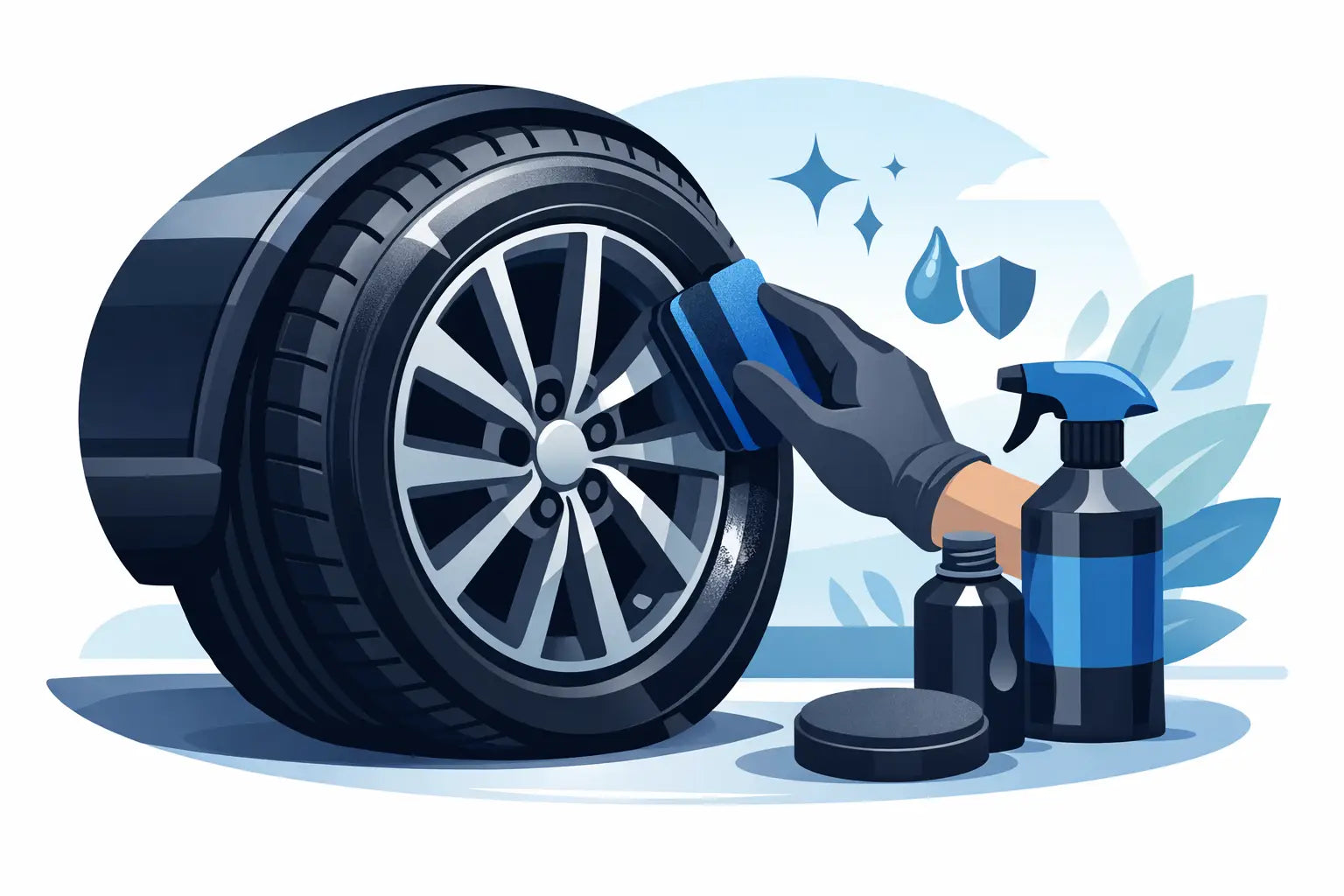
Freshly dressed tyres can make a clean car look finished. Bad tyre dressing can do the opposite by slinging down the bodywork, turning patchy after one wet drive, or fading before the weekend is over. If you want tyre dressing that lasts, the answer is not hype or a greasy shortcut. It comes down to chemistry, surface prep and controlled application.
What actually makes tyre dressing last?
Durability starts with what the product is designed to do. Some dressings are built for quick gloss and immediate visual impact. Others are formulated to bond more evenly, resist wash-off and hold their finish through rain, road grime and regular use. Those are not the same thing.
A tyre sidewall is a hostile surface. It flexes constantly, picks up traffic film, gets hit with water, salt and UV, and runs hot. Any product sitting on top of old silicone residue, browning, or road contamination is going to fail early. That is why longevity is rarely just about the dressing itself. The tyre has to be properly cleaned first, otherwise even a strong formula is trying to bond to contamination rather than rubber.
The other factor is finish level. High-gloss products often rely on heavier surface loading. They can look dramatic at first, but too much product increases the chance of sling and uneven wear. A satin or low-sheen finish usually lasts more cleanly because the product can be applied thinner and more evenly. For many professional detailers, that is the better trade-off.
Tyre dressing that lasts starts with tyre cleaning
If the sidewall is not fully stripped, durability drops fast. Old dressing, blooming, road film and embedded grime all interfere with even coverage. The tyre may look clean after a basic wash, but that is not the same as being ready for dressing.
Use a dedicated tyre cleaner and a stiff tyre brush. Work the cleaner until the foam or residue stops pulling brown from the rubber. On neglected tyres, this can take more than one pass. Rushing this stage is the main reason people think a product has poor durability when the real issue is poor prep.
Once cleaned, the tyre needs to be properly rinsed and dried. Applying dressing to a damp sidewall dilutes the product and affects how it lays down. On warm days this matters less if the moisture flashes off quickly, but on cooler or humid days it can make the finish streaky and weak from the start.
For trade work, this prep stage is where consistency is won or lost. A dressing can only perform to its chemistry. It cannot correct lazy tyre cleaning.
Water-based vs solvent-based dressings
This is where a lot of confusion starts. Water-based and solvent-based products can both work well, but they behave differently.
Water-based tyre dressings are usually easier to control, easier to layer and more likely to leave a clean satin finish. A good one gives strong visual improvement without the sticky feel and overdone shine that many enthusiasts have moved away from. They are often the better fit for modern detailing workflows because they are easier to level, easier to maintain and less likely to create mess if applied properly.
Solvent-based dressings tend to offer a wetter, glossier look and can perform strongly in poor weather, but they need discipline. Over-application is common, and when that happens the result is sling, uneven drying and a finish that attracts dust. Some users still prefer them for very tired tyres or a specific showroom look, but durability in the real world still depends on prep and restraint.
There is no universal winner. If you want a controlled OEM-style finish that survives normal washing and daily use, a well-formulated water-based dressing is often the smarter choice. If your priority is maximum gloss on a vehicle that is not seeing much road time, a solvent-led option may suit the brief better.
Application technique matters more than people think
A durable finish is usually a thin finish. That sounds counterintuitive, but tyre dressings tend to perform best when spread evenly rather than loaded on.
Apply the product with a proper tyre applicator, not a random sponge that dumps material into grooves and lettering. Work it into the sidewall in a controlled pass, making sure the coverage is complete but not excessive. Then leave it alone for a few minutes. If the tyre absorbs the product unevenly, a second light coat can even things out. Flooding the sidewall in one go rarely improves durability.
Wipe away excess if needed. This one step cuts sling dramatically. It also gives a more uniform finish, which matters just as much as outright longevity. A dressing that lasts two weeks but looks patchy after two days is not a good result.
For professional use, repeatability matters. One thin coat, short cure time, optional second coat, wipe excess. Simple process. Better outcome.
Why some tyres hold dressing better than others
Not all tyre sidewalls behave the same way. Some absorb product evenly and settle into a clean satin finish. Others resist it, go blotchy, or need more prep before they stop leaching old residue.
Tyre age plays a part. Older rubber often shows more blooming and may have years of dressing build-up to remove. Sidewall design matters too. Deep lettering and complex shoulder patterns can trap product and make sling more likely if the dressing is not worked in properly.
Vehicle use matters just as much. A garage-kept weekend car and a daily driver covering motorway miles through wet weather are not equal tests. If a customer says they want tyre dressing that lasts, the honest answer is always tied to how the car is actually used. Rain, mileage, wash frequency and road conditions all change the result.
That is why inflated durability claims are usually meaningless without context. On a maintained car with properly cleaned tyres, a quality dressing can hold a strong finish through multiple drives and routine washes. On a neglected daily in winter, expectations need to be realistic.
The finish you choose affects durability
There is a reason experienced detailers often favour satin over high gloss. Satin looks cleaner for longer.
A very glossy tyre can look impressive on day one, but once dust sticks, water spots form, or the finish starts to wear unevenly, the drop-off is obvious. A satin dressing tends to fade more gracefully. It still enhances the rubber, darkens the sidewall and completes the look of the vehicle, but it does not scream for attention or expose every flaw.
That does not mean gloss is wrong. It means gloss needs the right product and a careful hand. If the goal is durability with minimal fuss, lower sheen usually wins.
Common reasons tyre dressing fails early
Most failures are predictable. The tyre was not properly cleaned. The sidewall was still damp. Too much product was applied. The dressing was laid onto old silicone build-up. The car was driven immediately before the product had settled. Or the product itself was chosen for shine rather than staying power.
Washing method can also strip a finish faster than expected. Aggressive traffic film removers, strong degreasers and repeated use of harsh chemicals around the lower body will shorten the life of any dressing. If the vehicle is maintained with sensible wash chemistry, tyre appearance tends to stay more stable.
This is where a chemistry-first approach matters. Good maintenance products should work together rather than fight each other.
How to choose the right tyre dressing that lasts
Look past vague claims and ask better questions. What finish does it leave? Is it easy to apply evenly? Does it need one coat or two? How does it behave after rain? Does it sling? Can it be maintained without fully stripping the tyre every time?
For serious enthusiasts and trade users, usability matters as much as headline durability. A dressing that lasts reasonably well, applies cleanly and finishes consistently is more valuable than one that promises huge longevity but is awkward, messy or unpredictable.
That is the difference between performance chemistry and marketing noise. Liquid Laboratories builds products around repeatable results, not exaggerated claims, and tyre care should be judged the same way. Clean finish. Controlled application. Real durability.
If you want better tyre dressing performance this week, do one thing properly: spend longer cleaning the sidewall before you apply anything. The finish will look better, last longer and tell you far more about the product you are using.
Share:
Best Interior Cleaner for Car Plastics
Glass Sealant for Cars: What Actually Works