

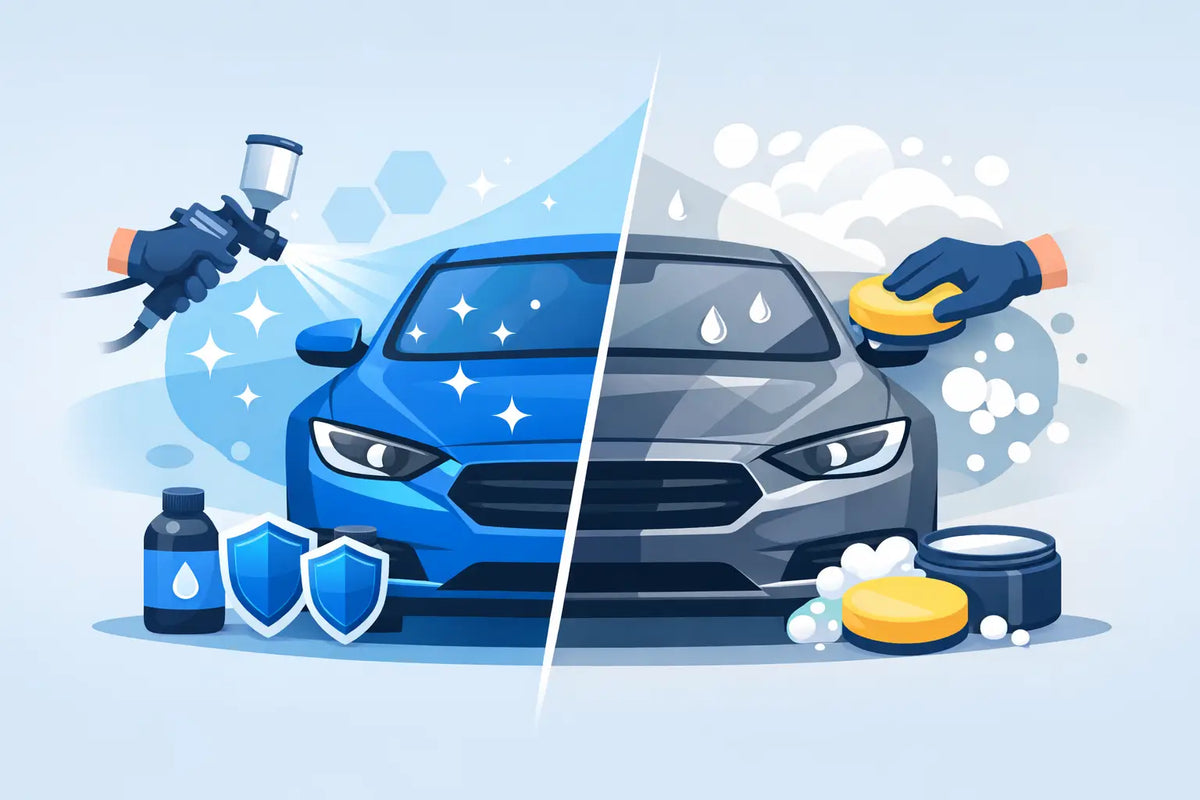
A freshly polished panel can make almost any protection look impressive for a day. The real test comes after wet motorway miles, repeated wash cycles, bird droppings, winter salt and a car park full of contamination. That is where ceramic coating vs wax stops being a question of shine and becomes a question of chemistry, preparation and maintenance.
Wax still has a place. Ceramic coating has clear advantages. Neither will repair neglected paintwork or remove the need to wash correctly. Choose based on the vehicle, the finish you want to preserve and how much time you are prepared to put into preparation.
Ceramic coating vs wax: the core difference
Car wax is generally a sacrificial protective layer. Natural carnauba waxes, synthetic waxes and hybrid paste or liquid formulas sit on the paint and enhance gloss while adding water repellency. They are easy to apply, forgiving to use and simple to refresh. Their weakness is longevity: detergents, road film, heat and abrasion gradually wear the layer away.
A ceramic coating is a liquid chemical protection system that cures into a more durable film on the paint. Most consumer and professional coatings use silica-based chemistry, commonly described as SiO2, often with additional resins, solvents and performance additives. Once correctly applied and cured, the coating is more resistant to chemical attack, UV exposure and wash-induced wear than wax.
That does not mean a coating makes paint invincible. The word “ceramic” has been stretched hard by marketing. A genuine coating can help reduce staining, improve cleaning behaviour and maintain gloss for far longer than wax, but it will not prevent stone chips, stop deep scratches or make a neglected wash routine harmless. ZERO HYPE. PURE CHEMISTRY.
Durability: where ceramic earns its place
Wax durability is typically measured in weeks or a few months, depending on the product, weather, wash frequency and storage. A weekend car kept in a garage may hold wax well. A daily driver travelling through British rain, grit and traffic film will burn through it much faster.
A properly installed ceramic coating operates on a different timetable. Product quality, layer thickness, paint preparation, cure conditions and aftercare all affect the result, but a quality coating can protect for years rather than weeks. That makes it particularly useful on daily drivers, high-value vehicles, client work and fleet vehicles where repeat correction is neither efficient nor desirable.
The trade-off is commitment. Wax can be applied on a clean, dry car and improved later with another coat. A ceramic coating needs the paint to be properly cleaned, decontaminated, polished where necessary and panel-wiped before application. Apply it over embedded contamination, oils or poor polishing work and you are locking a compromised surface beneath a durable layer.
For a professional detailer, that preparation is not an optional extra to quote around. It is the work that determines whether the coating performs and looks right. For an enthusiast, it is the difference between a coating that feels like a serious upgrade and one that becomes an expensive lesson in rushing.
Gloss, warmth and visual character
Wax remains popular because it can produce a warm, rich finish, especially on darker solid colours and classic paintwork. It often gives paint a softer, more rounded look that owners associate with a concours-style finish. If the car is a weekend toy and applying wax is part of the enjoyment, there is no reason to pretend that ritual has no value.
Ceramic coatings tend to deliver a sharper, cleaner appearance. The paint can look crisper, with stronger reflections and a more glass-like finish. On modern metallics, whites and highly corrected dark paint, that clarity can be exceptional.
The key point is that protection does not create paint correction. Swirls, holograms, water-spot etching and sanding marks remain visible under both wax and coating. A coating may make them look more pronounced because of its clarity. Correct the defects you want removed before you protect the paint, then choose the product that supports the look you prefer.
Water behaviour is useful, not the whole story
Many people judge protection by water beading. It is visually satisfying, but it is only one signal. Fresh wax can bead aggressively, and a coating can still be working even when water behaviour has softened due to traffic film, mineral deposits or clogged surface contamination.
Ceramic coatings generally offer stronger water repellency and better water sheeting over time. This helps reduce how firmly grime bonds to the surface, making routine washing quicker and safer. It does not mean the car cleans itself. In fact, tightly beaded water left to dry can still create mineral spots, particularly in hard-water areas.
The best maintenance habit is simple: pre-wash thoroughly, use a pH-neutral shampoo for contact washing, work with clean wash media and dry the vehicle properly. Aggressive traffic film removers, harsh wash chemicals and dirty sponges will shorten the life of any protection system. Chemistry can only compensate for poor process up to a point.
Application: simple wax or controlled coating?
Wax is the lower-risk option for most owners. Apply a thin, even layer to cool, clean paint, allow it to haze if the product requires it, then buff it clear with a quality microfibre. If you apply too much, you will waste product and make removal harder, but the consequences are usually minor.
Ceramic coating requires more control. The vehicle should be washed, chemically decontaminated, mechanically decontaminated where needed, dried and inspected under proper lighting. Paint correction should be completed before the final panel wipe. Temperature, humidity and air movement matter because they affect flash time and curing behaviour.
The coating must then be levelled methodically. Leave high spots behind and they can cure as visible dark or rainbow-like patches that require polishing to remove. Apply too little, too much or too slowly and the finish can become inconsistent. This is why coating installation rewards disciplined process rather than speed.
A professional application is often sensible for vehicles with soft paint, complex bodywork, limited indoor space or owners who want correction and coating carried out as one controlled service. Capable enthusiasts can achieve excellent results at home, but only when they respect the preparation and cure window instead of treating the bottle like a spray sealant.
Cost: assess the full job, not the bottle
Wax costs less at the point of purchase and has a lower barrier to entry. It is a practical choice for owners who wash frequently, enjoy hands-on maintenance or need a quick seasonal protection boost. Its lower durability can be acceptable when application is easy and the paint is already in good condition.
Ceramic coating costs more because the product is only part of the job. The real investment is correction time, surface preparation, controlled installation and aftercare. On a well-kept vehicle intended for long-term ownership, that investment can make sense. Less frequent reapplication, easier maintenance and reduced exposure to preventable staining can save time over the life of the car.
For trade work, pricing should reflect the process honestly. Do not sell a multi-year coating as a quick wash-and-wipe upgrade. Clients may not see the decontamination stage, but they will see the consequences if it is skipped.
When wax is the better choice
Wax is not outdated. It is simply a different tool. Choose wax when the car is used lightly, you enjoy regular detailing sessions, you want a warm finish, or you need flexible and affordable protection for a short ownership period. It is also useful as a seasonal top-up on paint that is already protected by a compatible sealant system.
Classic cars can be another sensible use case. Some owners prefer a traditional wax finish and are prepared to maintain it. That preference is valid, provided expectations are realistic about durability and chemical resistance.
When a ceramic coating is the better choice
Choose a ceramic coating when durability, easier maintenance and chemical resistance matter more than quick application. It is suited to daily drivers, prestige vehicles, newly corrected paintwork and client cars where the owner wants a long-term protection plan rather than a monthly reapplication cycle.
It is also a strong option for anyone who values wash efficiency. A coated vehicle still gets dirty, but contamination is usually easier to shift during a proper pre-wash and contact wash. That reduces the temptation to scrub hard at bonded grime - exactly the habit that creates unnecessary marring.
At Liquid Laboratories, the approach is straightforward: match protection chemistry to the real workload of the vehicle, then support it with correct wash products and repeatable technique. The strongest bottle in the world cannot outperform a poor maintenance routine.
The verdict: choose protection you will maintain
Ceramic coating wins on durability, chemical resistance and maintenance efficiency. Wax wins on simplicity, cost and the satisfaction of frequent hands-on finishing. The right choice depends less on which product sounds more premium and more on whether it suits the car’s use, condition and care routine.
If you are unsure, start with the paint. Inspect it in honest lighting, decide which defects need correction and be realistic about how the car is washed. Protection should make ownership easier, not add another product to apply with no plan behind it.
Share:
Best Ceramic Maintenance Products That Work
Best Ceramic Coating Toppers for Real Protection