
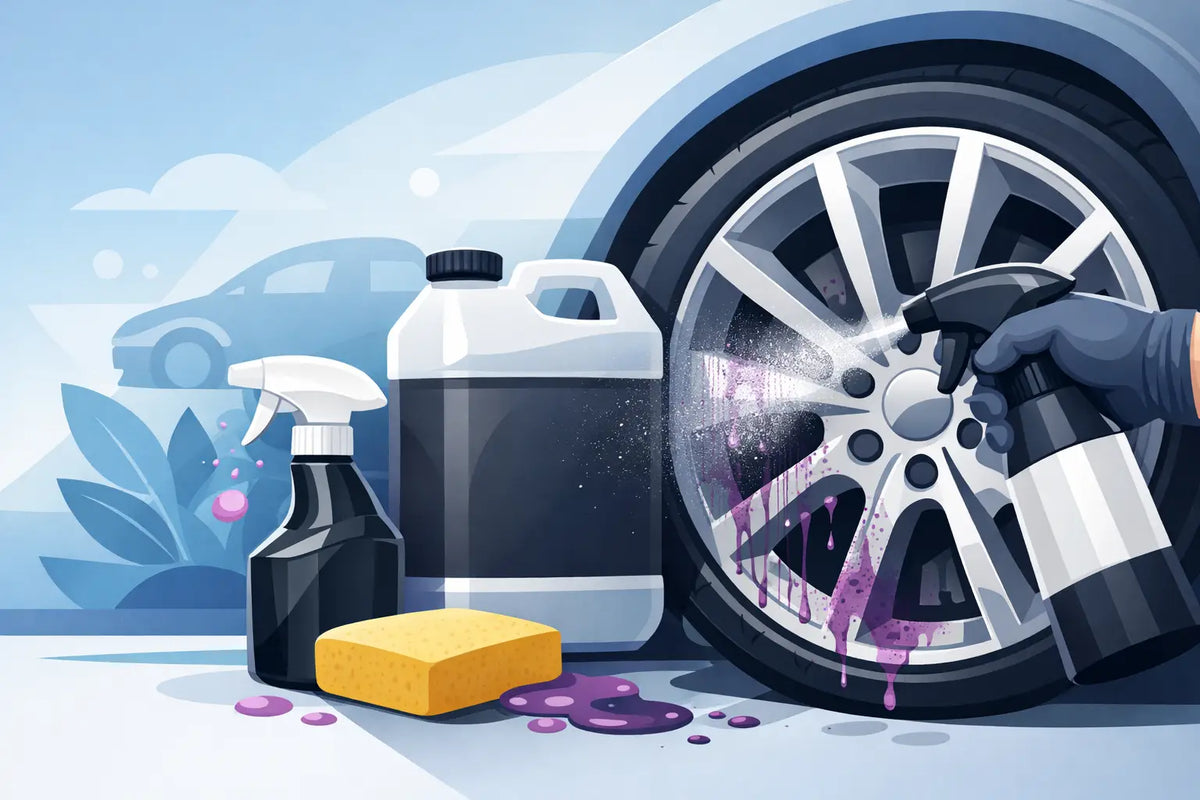
Brake dust is not just dirt. A proportion of it is hot ferrous contamination that embeds itself into wheel finishes, paintwork and lower body panels. Leave it there and it can contribute to roughness, staining and corrosion marks that no amount of standard shampoo will properly shift. The best iron fallout removers are built for this specific job: chemically breaking down bonded iron particles so they can be rinsed away safely.
The purple reaction gets the attention. Performance comes from what happens before it: controlled chemistry, enough working time, sensible viscosity and a formula that removes contamination without turning a maintenance wash into a risk assessment. ZERO HYPE. PURE CHEMISTRY.
What an iron fallout remover actually does
An iron remover is a chemical decontaminant, not a stronger wheel cleaner. It reacts with ferrous particles from brake pads, discs, rail dust and industrial fallout. As those particles dissolve, most formulas produce the familiar red or purple bleeding effect. That colour change confirms a reaction is taking place, but it does not automatically prove one product is better than another.
A good formula needs to do three things well. It must reach the contamination, stay wet long enough to react and rinse cleanly from the surface. On heavily contaminated wheels, it should also reduce the need for aggressive brush pressure. Less friction means less chance of marring sensitive lacquer, gloss black wheels or intricate wheel faces.
Iron removers are useful on painted wheels, alloy wheels, painted bodywork, glass and many exterior hard surfaces. They are especially valuable before machine polishing, applying a ceramic coating or carrying out a full decontamination wash. For protected vehicles, they are a maintenance tool to use when contamination demands it, not a substitute for correct regular washing.
Best iron fallout removers: what separates them
There is no single best formula for every vehicle, working environment or contamination level. A mobile detailer cleaning a client’s neglected wheels in winter has different requirements from an enthusiast maintaining a coated weekend car. The right choice comes down to reaction speed, cling, odour, surface compatibility and cost per working litre.
Reaction time without needless aggression
Fast reaction is useful, particularly on wheels with baked-on brake dust. But fast does not mean harsh. The strongest-looking purple bleed can be a poor measure of safety or total cleaning ability. Look for a product that begins reacting promptly yet gives a realistic dwell window before it dries.
In British weather, dwell time changes quickly. A cool, damp morning gives chemistry more time to work. A warm panel in direct sun can dry a product before it has finished, increasing the chance of residue or staining. The best products give clear instructions and behave predictably when used on a cool, pre-rinsed surface.
Cling where it matters
Thin, watery fallout removers can run straight off vertical wheel barrels and lower doors. That wastes product and reduces contact time. A lightly thickened formula can cling more effectively to spokes, calipers and vertical paintwork, making each trigger pull work harder.
There is a trade-off. Excessively thick gel formulas can be harder to rinse from tight areas and may encourage over-application. For regular use, controlled viscosity is the better target: enough cling to work, enough fluidity to rinse without drama.
Surface safety and sensible use
Most quality iron removers are designed for modern clear coats and painted wheel finishes, but “safe” is not a licence to ignore process. Never apply to hot surfaces, never allow the product to dry and do not assume every aftermarket finish, damaged lacquer or bare metal component will react the same way.
If you are working on polished bare aluminium, anodised parts, compromised powder coat or unknown wheel finishes, test a discreet area first. This is not cautious marketing. It is professional process control. Chemistry works best when the operator understands the surface in front of them.
Odour and working environment
Traditional iron-reactive chemistry often has a sulphurous smell. It is normal, but it is not pleasant in a confined unit, underground car park or busy mobile setup. Lower-odour formulas make regular use easier, especially when treating full vehicles rather than one set of wheels.
Do not choose solely on fragrance. A scented product that lacks dwell time or cleaning power is still the wrong product. But where two formulas perform comparably, reduced odour is a legitimate operational advantage.
How to choose for wheels, paintwork and trade work
For heavily soiled wheels, choose an iron remover with strong cling and enough dwell time to reach the barrel behind the spokes. Rinse loose grime first. Iron remover is far more effective when it is not trying to dissolve a layer of road film, salt and mud before reaching brake dust. Follow with a dedicated wheel cleaner only when the remaining contamination calls for it.
For paintwork, a sprayable, easy-rinsing formula is usually the better choice. Apply after the pre-wash and contact wash, when the surface is clean enough for the product to contact embedded particles directly. Treat the lower doors, rear panel, boot lid and horizontal surfaces as priority areas. The exact contamination pattern depends on where the vehicle is driven and stored.
For trade operators, repeatability matters as much as outright strength. The right fallout remover should perform consistently across fleet work, daily drivers and higher-value vehicles, with a predictable dilution or ready-to-use cost. It also needs packaging and trigger performance that hold up to repeated use. A great chemical in a bottle that leaks or sprays poorly creates wasted time on every job.
Serious enthusiasts should consider how often they will actually use it. A larger bottle offers better value when maintaining several cars or regularly deep-cleaning wheels. For a lightly used, coated car, a smaller format may be fresher, easier to store and more than sufficient for periodic decontamination.
A correct iron remover process
The process is simple. Rushing it is where problems start. Work in the shade, on a cool vehicle, with appropriate gloves and eye protection. Start by rinsing the wheels and bodywork to remove loose contamination. This reduces product waste and prevents grit being moved around during agitation.
Apply the iron remover evenly, concentrating on wheel barrels, spokes, lower panels and known contamination hotspots. Let it react for the stated dwell time. Watch the surface rather than relying on a fixed number of minutes. If conditions are drying the product too quickly, rinse sooner. Do not stretch the dwell time in the hope of extracting extra performance.
Where contamination remains, use a soft wheel brush or detailing brush only after the chemical has had time to work. Gentle agitation can help the formula reach complex areas, but the product should be doing the heavy lifting. Rinse thoroughly, including behind wheel spokes, around calipers and from panel gaps.
On paintwork, follow with a final rinse and assess the surface by touch once clean. If it still feels rough, bonded tar or other contamination may be present. Iron remover is one stage in a decontamination system, not a cure-all. Clay can be appropriate afterwards, but only when necessary and with suitable lubrication, because unnecessary claying can introduce marring.
Common mistakes that waste product
The most common mistake is applying iron remover to a dry, filthy wheel. The formula then attacks only the contamination it can reach, while road grime acts as a barrier. Pre-rinsing improves access and often reduces the amount of product required.
Another is using it every wash because the purple reaction is satisfying. Frequent iron decontamination is not automatically better maintenance. Use it when brake dust is bonded, before protection work, after harsh winter mileage or when the finish feels contaminated. A properly maintained vehicle usually needs it less often than a neglected one.
Finally, do not confuse dramatic bleeding with a clean surface. Some purple runoff may be product reacting as it travels across the panel, while severe contamination may need a second targeted application. Judge results after rinsing: clean wheel faces, smooth paintwork and reduced need for mechanical force are the measures that count.
The best iron fallout remover is the one that fits your process, reacts reliably and leaves the surface ready for the next stage. Use it with discipline, not theatre, and even stubborn brake dust becomes a controlled chemical problem rather than an hours-long scrubbing job.
Share:
Car Glass Protection Guide for Clearer Driving
Is Snow Foam Enough for a Proper Car Wash?