

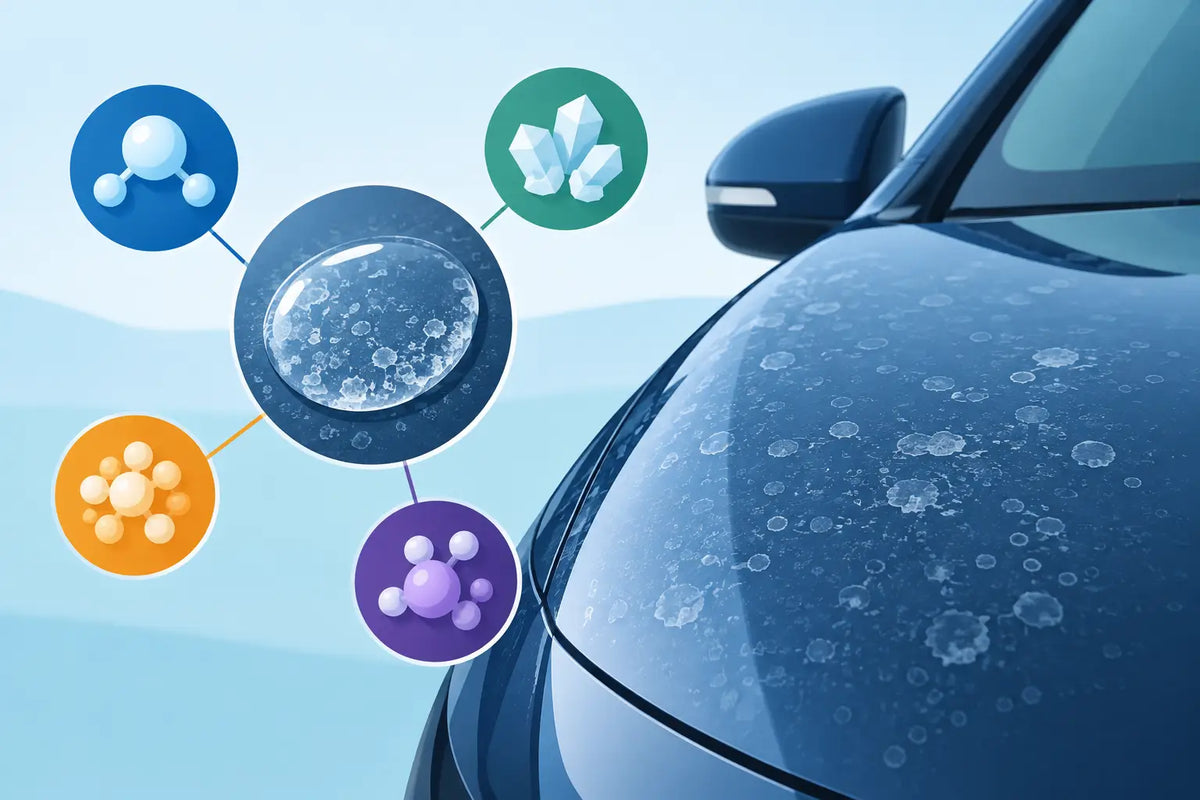
A clean car can look worse than a dirty one when it has been left to dry badly. Those pale rings on gloss paint, stubborn marks on glass and chalky residue around badges are not all the same problem. What causes car water spots is usually what the water leaves behind after it evaporates - but heat, contamination and the condition of the surface decide how serious the damage becomes.
This is not just a cosmetic issue. Fresh mineral residue is usually straightforward to remove. Leave it on a hot panel, especially one with compromised protection, and the same spot can progress into a mark that requires machine polishing. Chemistry matters. So does process.
What Causes Car Water Spots on Paint?
Most water spots begin with dissolved mineral salts. Tap water contains varying levels of calcium and magnesium, commonly referred to as limescale minerals. When a droplet dries, the water evaporates and these solids remain on the surface. The familiar white ring is simply concentrated residue following the edge of the droplet.
Hard-water areas make this more obvious, but no tap water is perfectly clean. Even relatively soft water can leave visible spotting on dark paint, black trim and glass if it dries in direct sun. The water itself is rarely the only culprit. It is the evaporation cycle that concentrates whatever was in it.
Rainwater can produce a different type of mark. Pure rain is not especially mineral-heavy, but it collects airborne contamination as it falls and sits on the vehicle. Industrial fallout, road film, pollen, soot and salts can all become part of the droplet. When it dries, the residue is often dirtier, more acidic and less predictable than a fresh wash-water spot.
Sprinklers are particularly unforgiving. They repeatedly hit the same panels with untreated water, then let it bake dry. A single shower may leave minor spotting. Daily sprinkler exposure can leave dense mineral deposits on paintwork, glass, plastics and brightwork.
Why Heat Turns a Water Spot Into a Bigger Job
A hot panel speeds up evaporation. That sounds obvious, but its effect is often underestimated. Faster evaporation means mineral content is deposited more quickly and in a smaller area. The concentration rises, giving the residue a stronger grip on the surface.
Heat also reduces working time during washing. Shampoo, rinse water and drying aid can flash off before they are safely removed. On black paint in bright sunshine, this can happen in seconds. The result is uneven drying and a higher risk of spot formation, even with a careful wash technique.
The more serious issue is etching. Mineral deposits and acidic contamination can interact with clear coat over time, particularly when heat is involved. Rather than sitting on top of the surface, the mark starts to affect the upper layer of paint or coating. At that point, a normal wash will not remove it.
There is an important distinction here. A true etched water spot is not dirt. It is surface damage. Throwing stronger chemicals at it is rarely the answer and can create a second problem, especially on sensitive trim or older paint. Diagnose first, then correct only as far as necessary.
The Main Types of Car Water Spots
Not every spot needs the same treatment. Understanding the difference prevents wasted effort and unnecessary abrasion.
Type 1: Fresh mineral residue
This is the common white or grey ring left after tap water dries. It sits on top of paint, glass or trim and will often respond to a thorough wash, a dedicated water-spot remover or a mildly acidic cleaner used correctly. It is usually most visible on darker vehicles and glass.
Type 2: Bonded mineral deposits
If residue has been left through several heat cycles, it can become harder and more stubborn. It may feel rough, look chalky and resist normal shampoo. Glass is particularly prone to this because deposits have a clear, flat surface on which to show themselves.
Type 3: Etched paint or coating marks
These spots can look like residue but remain after chemical cleaning. Under inspection lighting, they may appear as dull circles or irregular outlines in the clear coat. Depending on severity, correction may require a finishing polish or a more measured paint-correction process.
Type 4: Contaminated rain marks
Rain spots often carry traffic film, industrial contamination and organic material. They may look brown, grey or oily rather than clean white. A proper pre-wash and contact wash is the correct starting point. Do not assume every rain mark is limescale.
Why Protection Helps, But Does Not Make a Car Spot-Proof
Wax, sealant and ceramic coating provide a sacrificial or resistant layer between contamination and the vehicle’s finish. A well-maintained protected surface releases water more easily, is less likely to hold contamination and is usually quicker to dry safely. That is a genuine maintenance advantage.
But water behaviour is not a protection test on its own. Strong beading can leave round droplets sitting on a panel. If those droplets contain minerals and are allowed to dry in the sun, they can still spot. Hydrophobic performance helps water move, but it does not remove minerals from the water.
This is the trade-off: a coating can reduce adhesion and make maintenance easier, but it does not excuse poor drying practice. Protection should make your process more forgiving, not replace it.
Coatings can also be marked by water spots. Sometimes the deposit is sitting on the coating and can be removed chemically. Sometimes the coating itself has been affected. In severe cases, the contamination may be through the protection and into the clear coat. The only reliable approach is to start with the least aggressive method and inspect after each stage.
Prevent Water Spots Before They Start
The strongest defence is controlling drying, not chasing marks afterwards. Wash in the shade where possible, or work when panels are cool. If you cannot avoid warmer conditions, wash smaller sections and rinse thoroughly before moving on. Do not let shampoo or pre-wash products dry on the vehicle.
Use plenty of water during the rinse stage. A free-flowing final rinse helps sheet water from flatter panels, reducing the number of droplets left behind. A quality pH-neutral shampoo also matters because it cleans without adding unnecessary residue or compromising existing protection.
Dry the vehicle promptly with clean, high-quality microfibre drying towels. Blot or guide the towel across the paint rather than grinding it into the surface. Compressed air or a vehicle dryer is useful around mirrors, grilles, badges, door shuts and fuel fillers, where trapped water will otherwise creep out later and leave marks.
For serious enthusiasts and professional detailers, purified final-rinse water is worth considering. Deionised or reverse-osmosis water contains far fewer dissolved solids, so any remaining droplets are less likely to leave visible mineral residue. It is not essential for every maintenance wash, but it is a practical upgrade in hard-water areas and for high-value finishing work.
Keep the vehicle protected and maintain that protection properly. When paint, glass and trim are clean and well protected, water spots are less likely to bond aggressively. Liquid Laboratories approaches this as a system: controlled cleaning, compatible protection and repeatable maintenance. No hype. Just fewer variables working against the finish.
How to Remove Water Spots Without Creating Damage
Start with a cool, clean surface. If the mark is fresh, a safe wash followed by a dedicated spot-removal product may be enough. Always follow the product’s stated dwell time and do not allow acidic cleaners to dry. Glass, polished metal, matte finishes and unpainted trim each have different tolerances, so blanket application is poor practice.
If deposits remain, assess the surface rather than escalating blindly. On paint, try a gentle chemical decontamination stage first. On glass, a purpose-made glass polish may be appropriate for stubborn mineral deposits, but avoid aggressive abrasives on delicate surfaces.
When a mark remains after residue has been removed, it may be etched. A test spot with a fine finishing polish can establish whether correction is possible and how much cut is required. Measure paint where appropriate, especially on older vehicles, repainted panels or vehicles with unknown history. The aim is not maximum correction. It is the minimum intervention needed for a clean, even finish.
Do not use household descalers, vinegar mixes or abrasive pads as a shortcut. They may appear to work, but they introduce avoidable risk to trim, coatings, rubber seals and paint. Detailing is controlled chemistry, not kitchen chemistry.
The Detail That Makes the Difference
Water spots are usually the final symptom of a rushed rinse, a hot panel or water left where it should not have been. Catch them early and they are a maintenance task. Ignore them through sun, heat and repeated exposure, and they become correction work.
A cool wash, a proper final rinse and disciplined drying take minutes. Correcting etched paint takes considerably more. Give water nowhere to sit, and very little chance to leave its mark.
Share:
Detailing Business Margins: What Actually Matters
How to Clean an Engine Bay Safely Without Damage