

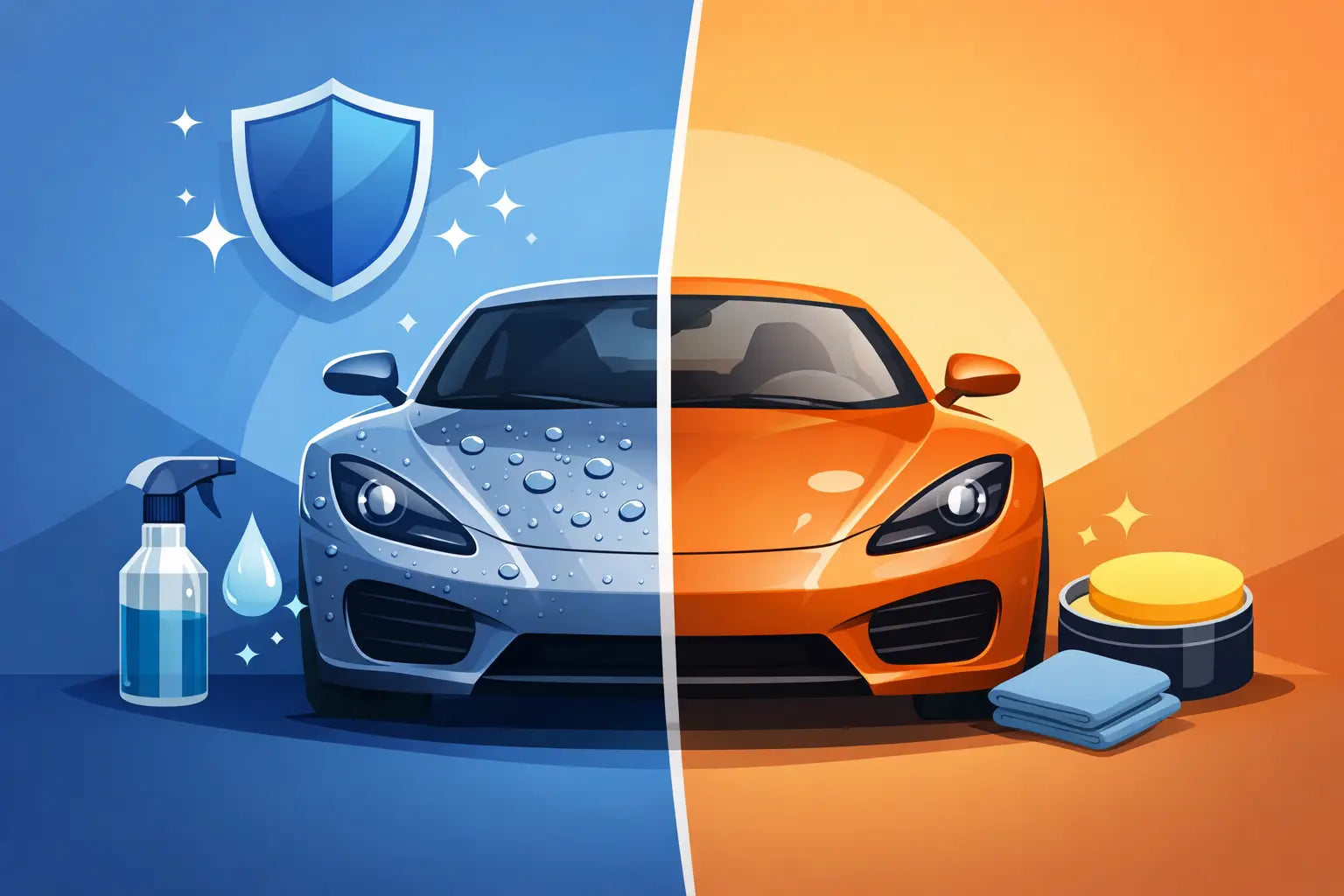
A freshly polished panel can make almost anything look good for a week. The real test starts after a few washes, a stretch of motorway miles, and a run of British weather. That is where the ceramic sealant vs wax debate stops being forum noise and becomes a practical choice about durability, maintenance, and time.
If you want the short version, wax still has a place, but it is no longer the default answer for anyone serious about paint protection. Ceramic sealants are built to last longer, resist detergents better, and keep maintenance simpler. Wax can still deliver a warm finish and an easy weekend detail, but it asks more from you in return.
Ceramic sealant vs wax: the real difference
Wax is the traditional option. Most car waxes use natural carnauba, synthetic ingredients, or a blend of both to leave a sacrificial layer over the paint. That layer boosts gloss, improves water behaviour, and offers short-term protection against the elements.
A ceramic sealant uses synthetic chemistry designed for stronger bonding, better chemical resistance, and longer durability. It is not the same as a full ceramic coating, but it sits much closer to that side of the market than a conventional wax. Think of it as a more advanced protection layer with fewer compromises in daily use.
That distinction matters. A wax mainly sits on the surface and gradually fades with washing, heat, traffic film, and weather exposure. A ceramic sealant is engineered to hold on better and remain effective for much longer, provided the paint is properly prepared.
Durability is where wax starts losing ground
For a garaged weekend car that is washed gently and rarely sees poor conditions, a quality wax can still be perfectly acceptable. You may get several weeks or a few months of respectable performance depending on the product, the climate, and how often the vehicle is cleaned.
For daily drivers, trade work, or any car exposed to regular rain, road salt, stronger shampoos, and contaminated roads, wax burns through quickly. It does not usually fail all at once. It fades panel by panel, loses hydrophobic behaviour, and stops giving you that freshly protected feel.
A ceramic sealant is far better suited to real-world use. It typically offers a longer service life, more stable water behaviour, and better resistance to wash chemicals. That means fewer top-ups, less inconsistency across the vehicle, and less time spent chasing lost protection. For professionals, that is margin and repeatability. For enthusiasts, it is less maintenance for better results.
Gloss, depth and finish
Wax still gets defended on looks, and not without reason. A good wax can produce a pleasing, rich finish, especially on darker colours and softer paint systems. Some people describe it as warmer or rounder in appearance.
The problem is that this can get overstated. Modern ceramic sealants can deliver a sharp, high-clarity finish with excellent gloss and slickness. On a properly corrected and prepared surface, the difference is often far smaller than people expect, especially once the car has been washed a few times.
In other words, finish should not be judged from a freshly buffed Instagram photo. It should be judged after a month of use. If the product still beads, still sheets, and still keeps the car easier to wash, that finish advantage becomes more meaningful.
Water behaviour is not the whole story
Beading sells products, but it can also confuse buyers. Plenty of waxes bead well at first. Tight beads alone do not prove strong protection, and they definitely do not prove longevity.
What matters is consistent hydrophobic behaviour over time and how easily contamination releases during a wash. Ceramic sealants tend to outperform wax here because they maintain surface tension and slickness for longer. The result is less dirt adhesion, easier drying, and better day-to-day usability.
That said, hydrophobic performance is only one metric. If a product beads nicely but struggles against traffic film, detergent exposure, or repeated wash cycles, it is not doing the full job. Protection should reduce maintenance, not just create satisfying water videos.
Application: wax is forgiving, sealant is more efficient
Wax is usually simple to apply. Spread a thin coat, allow it to haze if required, then buff off. That ease is part of the appeal, particularly for enthusiasts who enjoy the process as much as the result.
Ceramic sealants vary, but many are also straightforward when used correctly. Spray-on, wipe-on, and panel-by-panel formats have made them much more accessible than older protection systems. The difference is not that wax is easy and sealant is difficult. The real difference is that sealants tend to reward better prep and more disciplined application.
If the paint is poorly cleaned, still contaminated, or full of old residues, a ceramic sealant will not perform as intended. That is not a weakness in the chemistry. It is simply less willing to bond over neglect. Wax is often more forgiving on imperfect prep, but that flexibility comes with lower durability.
For serious results, neither product should be slapped onto dirty paint. Proper washing, decontamination, and residue removal matter. Chemistry made clear - prep decides performance.
Cost is not just the bottle price
Wax can look cheaper at the checkout, and sometimes it is. But bottle price tells only part of the story.
If you need to reapply wax every few weeks to keep the finish where you want it, the true cost includes your time, your labour, and your repeat product usage. For a professional detailer, that matters immediately. For an enthusiast maintaining more than one vehicle, it matters soon enough.
A ceramic sealant often costs more upfront, but the value is in lifespan and reduced maintenance. Longer intervals between applications, better resistance to wash chemicals, and easier cleaning can make it the more efficient option over time. If your goal is performance rather than ritual, wax starts to look less economical.
Ceramic sealant vs wax for different users
For trade detailers, the answer is usually straightforward. Ceramic sealants fit modern workflows better. They are faster to justify, easier to maintain as part of a customer care plan, and more convincing when clients ask how long protection will actually last. A protection product needs to survive more than one wash and a few days of dry weather.
For committed enthusiasts, the answer depends on what you enjoy. If you like frequent maintenance details, enjoy trying different finishing products, and do not mind regular reapplication, wax can still be satisfying. It is tactile, familiar, and for some owners part of the hobby.
If you want stronger performance with less repeat effort, ceramic sealant is the smarter choice. It suits daily drivers, performance cars, family vehicles, and anything that has to live outside or cover real mileage.
When wax still makes sense
Wax is not obsolete. It still suits owners who want a simple finishing product for a show car, a summer vehicle, or occasional use. It can also work as a quick aesthetic boost before an event, especially when longevity is not the main concern.
There is also the preference factor. Some people simply like waxing a car. That is fair enough. Detailing is partly about results and partly about process. But if the conversation is strictly about protection per application, wax is no longer the strongest option.
When ceramic sealant is the better call
Ceramic sealant is the better fit when you want protection that works harder between washes. It suits vehicles exposed to poor weather, regular road grime, and stronger maintenance cycles. It is also a better match for anyone building a structured detailing routine rather than relying on occasional top-up products.
This is why performance-led brands such as Liquid Laboratories focus heavily on chemistry-first protection. The market does not need more romantic language about shine. It needs products that survive contact with the real world.
The decision comes down to expectations
If you expect your protection to look good for a few weekends and you do not mind reapplying it often, wax can still do the job. If you expect chemical resistance, stable water behaviour, easier maintenance, and a more efficient routine, ceramic sealant is the stronger answer.
There is no need to overcomplicate it. Wax is older, softer, and shorter-lived. Ceramic sealant is more durable, more resistant, and better aligned with modern maintenance. The only time wax really wins is when you value the application ritual more than the long-term performance.
Choose the product that matches how the car is actually used, not how protection is marketed. Your paint does not care about nostalgia. It responds to preparation, chemistry, and consistency.
Share:
Best Ceramic Coating for Cars in 2026
Fallout Remover for Cars: What It Really Does