

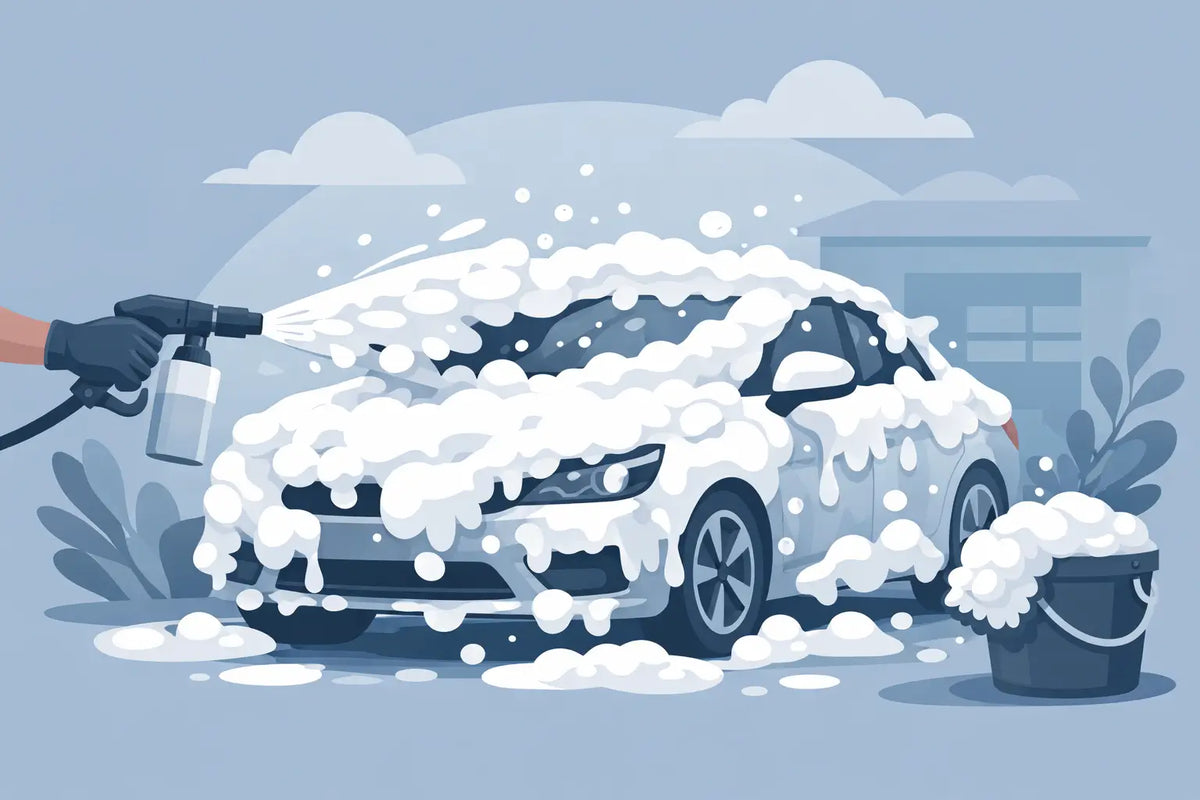
If your wash mitt is doing the hard work, your pre-wash is already behind. That is where the question matters: what does snow foam do? In simple terms, it softens and lifts road film, grit and traffic grime before you touch the paint. Used properly, it reduces the amount of contamination left behind for the contact wash, which means less rubbing, less risk and a more controlled wash process.
Snow foam is not there to replace a full wash. It is there to make the rest of the wash safer and more efficient. That distinction matters, especially if you are maintaining coated paint, soft clearcoat or vehicles that pick up heavy motorway grime.
What does snow foam do in a wash routine?
Snow foam sits in the pre-wash stage. Its job is to dwell on the surface, break down loose contamination and carry away as much dirt as possible during the rinse. Think of it as controlled chemical cleaning before mechanical cleaning.
On a dirty car, a lot of the damage happens when grit is dragged across the paint during contact washing. Snow foam helps by reducing that load first. It clings to vertical panels, works into surface dirt and gives your pressure rinse more to remove. The result is not magic. It is less contamination left for the mitt.
That matters for two reasons. First, it helps reduce wash-induced marring. Second, it can speed up the whole job because the contact wash is no longer trying to deal with the worst of the grime.
How snow foam actually works
Good snow foam is chemistry, not theatre. The visible blanket is useful because it extends dwell time and coverage, but the foam itself is not the performance metric. What matters is the surfactant system, cleaning strength, cling and rinse behaviour.
Surfactants lower the surface tension of water. That allows the solution to spread across dirty panels more effectively and get between the contamination and the paint. As the product dwells, it starts loosening the bond holding grime to the surface. When you rinse, that loosened contamination can be flushed away more easily.
The thicker the foam, the more dramatic it looks. But thick foam alone does not guarantee better cleaning. A product can produce an impressive shaving-cream effect and still underperform if the chemistry is weak. Equally, a slightly wetter foam can clean better because it stays active and rinses more freely. Serious detailing is about results, not social-media visuals.
What kind of dirt can it remove?
Snow foam is strongest against loose and moderate contamination such as dust, fresh road grime, traffic film and general dirt build-up. It can also help soften bug residue and organic grime, depending on the formula.
It is less effective against heavy bonded contamination, tar, iron fallout and old protection-clogged grime. For those, you need the right dedicated chemistry later in the process. Snow foam is a first strike, not a cure-all.
Why snow foam helps reduce swirls
Most wash swirls are not created by the mitt alone. They are created by dirt trapped between the mitt and the paint. If you remove more dirt before contact, you reduce the abrasive load.
That is the real value of snow foam. It improves wash safety by shifting cleaning work from mechanical agitation to chemical action. On well-maintained cars, that can make a noticeable difference over time. On neglected cars, it still helps, but expectations should be realistic. If the vehicle is heavily soiled, one round of foam may not strip everything back enough on its own.
This is also why technique still matters. Snow foam gives you a cleaner starting point. It does not excuse poor wash habits afterwards.
What does snow foam do for protected cars?
If the vehicle wears a wax, sealant or ceramic coating, snow foam can help maintain it by making the wash less aggressive. Less pressure from the mitt, fewer passes and fewer chances to grind contamination into the finish all work in favour of the protection layer.
That said, product choice matters. A pH-neutral snow foam is usually the safer maintenance option for protected vehicles because it cleans without intentionally stripping protection. A stronger alkaline foam — like Breaker — may be better when the car is genuinely dirty or when you want a deeper reset, but repeated use can affect weaker last-step products over time.
There is no single answer here. If you are maintaining a coated car that is washed regularly, a gentler snow foam usually makes more sense. If you are dealing with winter road film, diesel residue and salt, extra cleaning power may be the smarter call.
Snow foam is not shampoo
This is where plenty of people get it wrong. Snow foam and shampoo are not the same job in different bottles.
Snow foam is a pre-wash product designed to loosen and remove contamination before contact. Shampoo is for lubrication and controlled cleaning during the contact wash itself. A shampoo may foam in a lance, but that does not automatically make it a good pre-wash. In the same way, a snow foam may clean well, but it is not designed to replace a proper bucket wash on its own.
When the workflow is right, each stage supports the next. Pre-wash reduces dirt. Shampoo handles what remains. Protection then has a cleaner surface to bond with or sit on.
How to use snow foam properly
Application matters as much as formula. Start with a cool vehicle out of direct sunlight. If the panels are hot, dwell time drops and the risk of premature drying goes up.
Rinse the car first if it is carrying heavy loose grit or thick mud. Then apply the snow foam through a foam lance at the correct dilution. Cover the vehicle evenly, let it dwell for several minutes and do not let it dry out. Once the dwell is complete, rinse thoroughly from top to bottom or, depending on your preferred method, with enough pressure and coverage to flush contamination away fully.
After that, move to the contact wash. If the snow foam has done its job, the mitt should be dealing with residue, not the main bulk of the dirt.
Common mistakes that limit performance
The biggest mistake is chasing foam thickness instead of cleaning performance. Dense foam looks convincing, but dwell stability and surfactant action matter more.
Another common issue is using too little product or the wrong lance setting. Under-dosing can weaken cleaning. Over-dosing can waste product without improving results. There is also the habit of leaving foam on too long. More time is not always better. Once the product starts drying, performance drops and risk rises.
Finally, some users expect snow foam to leave the car fully clean. That is not what it is designed to do. If you judge it by whether it replaces contact washing, you are measuring the wrong thing.
Does snow foam work on very dirty vehicles?
Yes, but with conditions. On moderate dirt, a quality snow foam can remove a useful amount before contact. On very dirty vehicles, especially in winter, it may need support from a citrus pre-wash like Ignite or a traffic film remover on lower panels and rear ends where the grime is heavier.
That does not mean snow foam is pointless on filthy cars. It still helps soften and lift contamination across the vehicle. It just means chemistry should match the job. There is no benefit in pretending one product does every stage perfectly.
For professional detailers and serious enthusiasts, this is where a system-led wash routine wins. You select the cleaning strength based on contamination level, existing protection and finish sensitivity. Zero hype. Pure chemistry.
Is snow foam worth using every wash?
For most enthusiasts and trade operators, yes. If you care about minimising wash marring, preserving finish quality and keeping the process consistent, snow foam earns its place.
The value is even clearer on darker paint, softer paint systems and protected vehicles where finish quality matters. It is also useful from an efficiency point of view. A proper pre-wash can reduce the effort needed during contact washing and help keep wash media cleaner.
The only caveat is that not every wash requires the same strength. Light dust after a few dry days is different from caked road salt after a wet motorway run. The process should adapt.
At Liquid Laboratories, that is the point of chemistry-first detailing. Use the right product for the right stage, and the wash becomes simpler, safer and more repeatable.
So, what does snow foam do? It buys you control before the mitt touches the paint. And when you care about the finish, that is never a wasted step.
Shop the products mentioned
- Breaker - Alkaline Snowfoam — High-cling alkaline snow foam formulated to dwell, clean and carry contamination away. Real performance, not just impressive foam.
- Ignite - Citrus Pre-wash — Citrus-powered pre-wash for targeted work on lower panels, front ends and heavily soiled areas before the foam stage.
- React - Fallout Remover — For iron contamination that snow foam cannot shift. Use when panels feel rough after washing.
Share:
7 Best Pre Wash Products for Safer Washes
Best Products for Coating Prep