

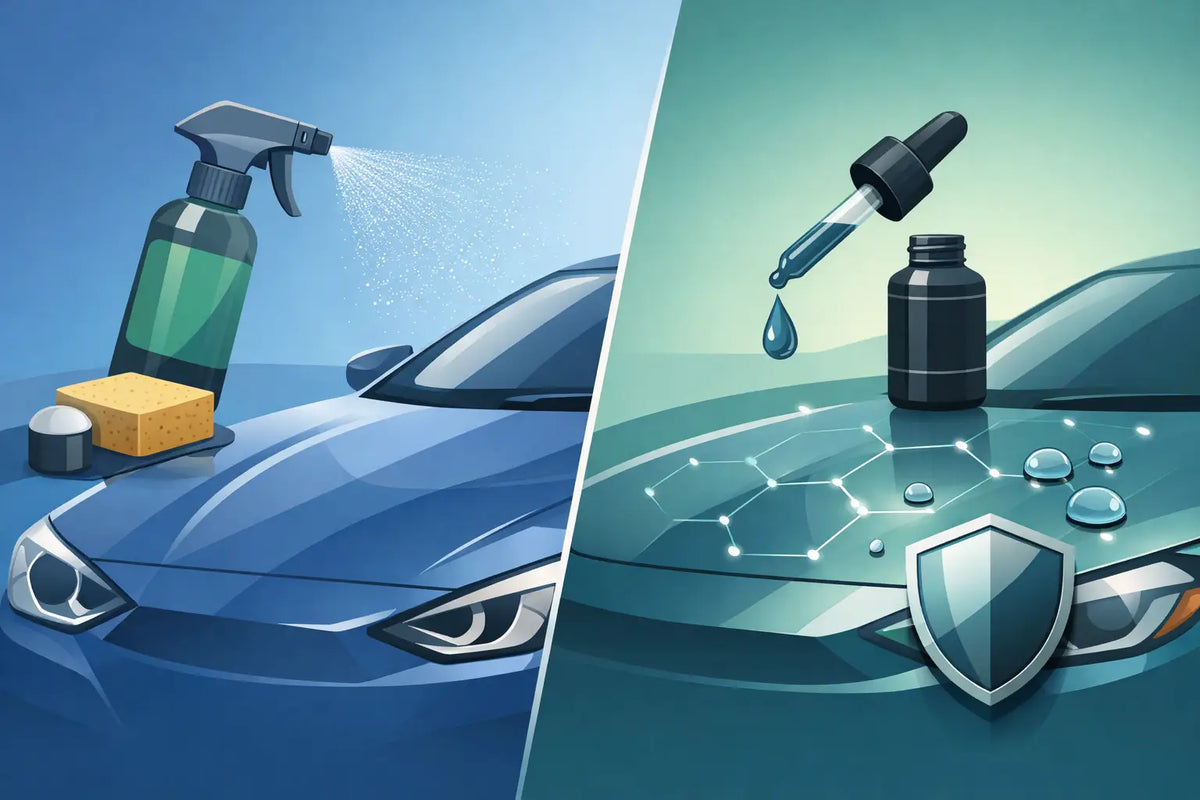
A clean, corrected panel can look exceptional for a few weeks with almost any protection on it. The test comes later: after motorway grime, repeated contact washes, winter salt and traffic film. That is where the spray sealant vs coating decision matters. Both can add gloss, water behaviour and a sacrificial layer between contaminants and clear coat. They are not, however, interchangeable.
Choose based on the vehicle, the preparation standard, the available time and how it will be maintained. Not the loudest durability claim on the bottle. ZERO HYPE. PURE CHEMISTRY.
Spray sealant vs coating: the real difference
A spray sealant is a quick-application protection product, usually built from synthetic polymers, silica technology or a blend of both. It is designed to bond to a clean surface with minimal effort. Apply it to a panel, level it correctly and it provides immediate visual improvement along with water repellency and easier routine washing.
A coating is a more concentrated, purpose-built protective system. Most modern paint coatings use ceramic chemistry, often based around silane, siloxane or silica-derived ingredients, to create a more durable film on properly prepared paint. It requires controlled application, careful levelling and a defined cure period. The chemistry is designed for longer-term performance, not speed alone.
The distinction is not simply whether a product comes in a trigger bottle. Some spray products are marketed as ceramic coatings, while some coating maintenance products are supplied in a spray format. Delivery method does not define protection class. Look at the intended use, required preparation, curing process and realistic durability.
Durability is only useful when it is realistic
A quality spray sealant can provide strong water beading, gloss and wash performance for several weeks or months, depending on use. It is ideal for regular top-ups and can make a well-maintained vehicle noticeably easier to clean. But its protective film is thinner and more vulnerable to aggressive chemicals, repeated abrasion and neglected wash routines.
A properly installed coating has greater chemical resistance and stays in place longer because it is engineered to bond more strongly to the surface. It can reduce contamination bonding, improve water behaviour and preserve the finish through a much longer maintenance cycle. That does not mean it makes paint scratch-proof, stone-chip proof or maintenance-free. Any product claiming otherwise belongs in the bin.
Durability figures should always be treated as a controlled best case, not a guarantee. A garaged weekend car washed with pH-neutral shampoo will retain protection differently from a daily driver parked outside beside a busy road. Hard water, automatic car washes, strong traffic film removers and poor washing technique will shorten the working life of either option.
Preparation decides the result
A spray sealant is forgiving, but it still needs a clean surface. Wash thoroughly, remove bonded contamination where necessary and ensure the paint is dry before application. If the vehicle has old wax, traffic film or oily residue sitting on the panel, the sealant will not bond as consistently. You may still see temporary beading, but durability will suffer.
A coating demands more. Proper decontamination, paint correction where required and a final panel wipe are not optional extras if you want a consistent result. Coating over embedded fallout, polishing oils or wash marring locks a compromised finish beneath a more durable layer. The coating may perform, but the vehicle will not look its best.
This is where professional detailers earn their result. Coating application is only one stage of a protection service. The inspection, correction, surface preparation, lighting and curing conditions are what allow the product to perform as intended. For an enthusiast working at home, the same standard applies: do not rush the preparation simply because the final bottle is expensive.
When a spray sealant is the smarter choice
Spray protection is not a lesser option by default. It is often the most sensible answer for vehicles that receive frequent maintenance, cars used hard through winter or owners who enjoy washing their own vehicle every fortnight. The application is fast, the learning curve is low and reapplication is straightforward.
It also works exceptionally well as a maintenance layer. A spray sealant can refresh gloss and hydrophobic behaviour after washing, whether the paint is bare, waxed, sealed or coated. On a coated car, choose a compatible product and use it sparingly. The goal is to maintain the existing protection, not bury it under unnecessary residue.
Use a spray sealant when speed, flexibility and easy replenishment matter more than maximum longevity. It is particularly effective on daily drivers, leased vehicles, wheels, door shuts and seasonal protection jobs where a full correction and coating install is not justified.
When a coating is worth the extra work
Choose a coating when the paint is in excellent condition, or when you are prepared to correct it first, and you want a longer protection interval. It suits prestige vehicles, cherished ownership cars and client work where durability, gloss retention and a more defined protection package have commercial value.
The coating route also makes sense for owners who want to reduce the effort involved in maintenance washing. Dirt will still land on the paint. Road film will still build. But a healthy coating can make that contamination easier to remove with the right wash process, reducing the temptation to scrub aggressively.
There is a commitment attached. A coating should be installed indoors or in stable conditions, away from moisture, dust and temperature extremes. Panels need methodical application in small sections, followed by accurate levelling before the product flashes too far. Cure time matters. Exposing fresh protection to rain, washing or chemical fallout too early can compromise the finish.
Application: fast protection versus controlled installation
Spray sealants reward simple technique. Work on cool panels, apply a light mist rather than soaking the surface, spread evenly with a clean microfibre and buff away residue with a separate towel. Heavy application does not create more protection. It creates smearing, wasted product and a harder buff-off.
Coatings require a more disciplined process. Apply only to a fully prepared panel, use the recommended applicator, monitor the flash time and level every section completely. Under-levelling can leave high spots that appear as darker, rainbow-like or greasy patches once cured. Overworking the product can reduce application consistency. Good lighting is essential because poor lighting hides poor work.
If you are new to coatings, start with a small, manageable panel rather than treating a full vehicle as a first experiment. Precision beats speed.
The strongest system often uses both
This is not always an either-or decision. A coating can provide the long-term foundation, while a spray sealant can be used periodically as a compatible maintenance product. The spray product restores water behaviour and adds slickness between deeper maintenance washes without requiring another full coating install.
The reverse approach also has value. Apply a spray sealant regularly to protect paint while you plan correction work or wait for suitable coating conditions. It is better to maintain clean, protected paint than leave it exposed because you are waiting for the perfect weekend.
Avoid stacking products blindly. If beading has dropped, diagnose the cause first. It may be contamination masking the protection rather than protection failure. A chemical decontamination wash can often restore performance without adding another layer of product.
Do not confuse beading with protection
Water beading looks impressive, but it is only one sign of surface behaviour. Tight beads can appear on a panel that still has limited chemical resistance or little remaining film thickness. Likewise, a coated panel may show flatter water behaviour when contaminated, even though the coating remains intact beneath the traffic film.
Assess protection by how easily the vehicle cleans, how the surface feels after washing, its response to a suitable maintenance process and how consistently it performs across the vehicle. Keep records if you are maintaining customer cars. Repeatable results are more useful than a single dramatic rinse video.
For most enthusiasts, a quality spray sealant applied regularly is the sensible starting point. For properly prepared paint where longer-term protection is the objective, a coating earns its place. Choose the system you can apply correctly and maintain consistently - that is where the real finish is built.
Share:
Best Products for Coating Maintenance That Work
When to Use Citrus Degreaser on Your Car