

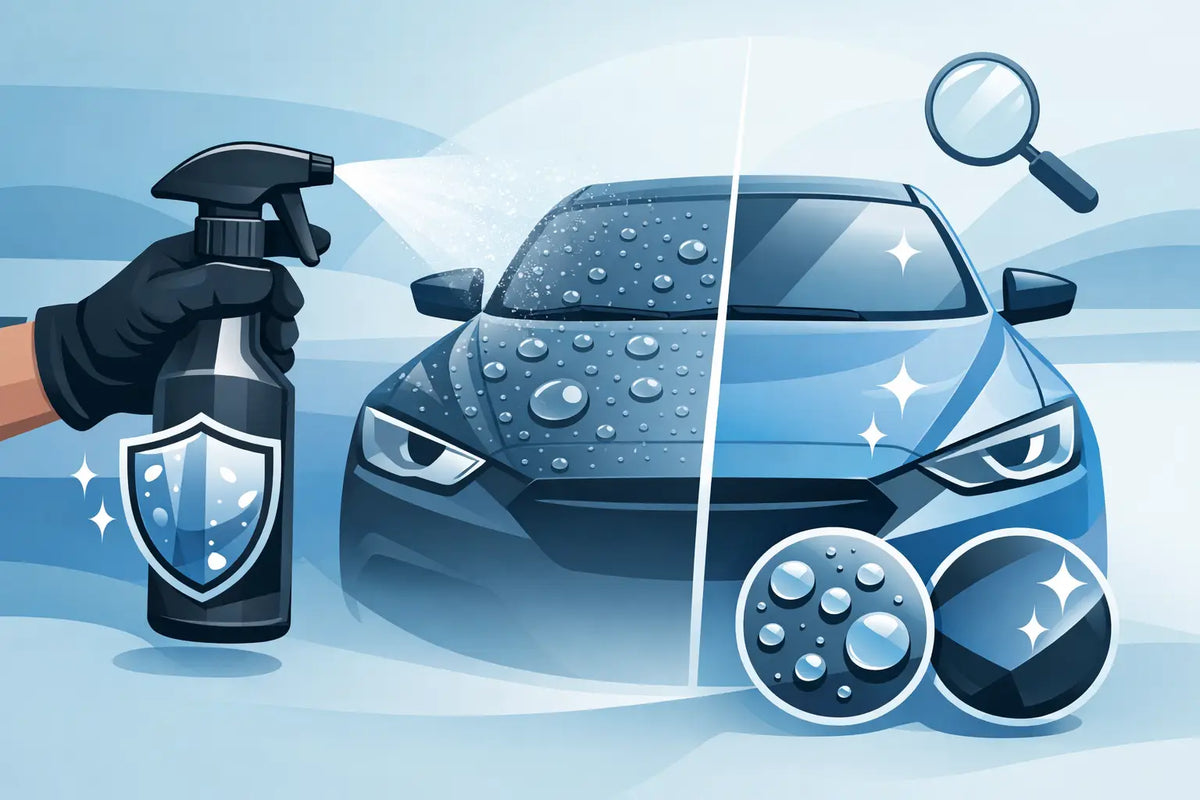
A proper ceramic spray sealant review starts where most marketing stops - with what happens after the first wash. Fresh application gloss is easy. Tight beading on day one is easy. The real question is whether the product still performs when the car has seen rain, traffic film, detergent, UV and routine maintenance.
That matters because spray sealants now sit in a crowded space between old-school waxes and full ceramic coatings. They promise fast application, credible protection and low effort upkeep. Sometimes they deliver exactly that. Sometimes they are just a dressed-up quick detailer with a shorter lifespan than the label suggests.
Ceramic spray sealant review - what you should judge first
If you are assessing one seriously, start with fit for purpose. A ceramic spray sealant is not meant to replace a properly installed coating in every scenario. It is designed to give meaningful protection with far less prep, less cure sensitivity and less installation time. For a daily driver, maintenance client or enthusiast who wants repeatable results without a multi-stage coating process, that can be the right tool.
The mistake is judging every product by the wrong standard. If you expect two-minute application and two-year durability, you are buying into hype. If you expect a spray sealant to improve gloss, add slickness, repel water and hold up for a reasonable maintenance cycle, you are asking a sensible question.
Performance should be judged across five areas: application behaviour, finish quality, hydrophobic response, chemical resistance and realistic durability. Miss one and the review is incomplete.
Application should be fast, not fussy
A good spray sealant earns its place by saving time. It should spread cleanly, level without drama and buff off without smearing on properly prepared paint. If it only behaves in perfect temperatures on a freshly polished panel, usability is already compromised.
This is where chemistry matters more than branding. Some formulas flash too quickly, making them grabby on warm panels. Others remain oily and streak-prone, especially on dark paint, glass and gloss black trim. The best products have a broad working window. They do not need babying.
For professional detailers, that translates directly into margin. For enthusiasts, it means confidence rather than second-guessing every panel. A product that looks easy on social media but becomes temperamental in real conditions is not efficient. It is costly.
Gloss is easy. Clarity is harder.
Most products in this category can add shine. That alone is not impressive. The better test is whether the finish looks cleaner and sharper rather than simply wetter or more artificial.
On solid colours, extra depth can look strong straight away. On metallics and pearls, what matters more is clarity - how cleanly the flake presents and whether the surface looks crisp in direct light. On black paint, you will see weaknesses quickly. Smearing, patchiness and static dust attraction show up fast.
The stronger formulas tend to enhance surface definition without overloading the paint with residue. That gives a finish that still looks right after a few days, not just ten minutes after buffing.
Durability in a ceramic spray sealant review
Durability claims are where the category gets noisy. Labels often quote ideal-case months, but real-world durability depends on prep, wash routine, storage, mileage and detergent exposure. A garaged weekend car in mild conditions is not a proper benchmark for a daily driver seeing motorway grime and repeated contact washes.
The useful way to judge durability is not just whether water still beads. It is whether the product continues to offer consistent behaviour across washing, rinsing and contamination build-up. Some spray sealants bead nicely long after their self-cleaning ability has dropped off. That can make them look alive when, in practical terms, they are already fading.
A stronger product should retain visible water behaviour, decent slickness and contamination release for a realistic period under normal maintenance. That might be a few months rather than half a year, depending on conditions. There is no shame in that. Honest performance beats inflated promises.
Water behaviour needs context
Hydrophobics sell products, but beading photos do not tell the full story. Small, tight beads look good. Fast sheeting often matters more. If water evacuates the panel quickly, less residue stays behind to dry into spotting.
That is especially relevant in the UK, where hard water, intermittent rain and damp storage conditions can expose weak products quickly. A sealant that combines beading with fast rinse behaviour is usually more useful than one that only produces dramatic bead shots for a camera.
Watch how the product behaves after a few maintenance washes. If the surface still rinses cleanly and dries with less drag, protection is doing real work. If behaviour falls away sharply after contact with shampoo and road film, the chemistry is not as resilient as the branding suggests.
Chemical resistance separates decent from disposable
A ceramic spray sealant does not need to resist the same abuse as a professional-grade coating, but it should survive routine maintenance chemistry. pH-neutral shampoos should not strip it prematurely. Traffic film removers and stronger cleaners will always reduce lifespan, but a worthwhile formula should not collapse after light exposure to maintenance products.
This is one reason surface prep matters. If the paint is carrying oils, old wax, filler residue or bonded contamination, the sealant is not bonding to clean substrate. Durability then becomes inconsistent and the product gets blamed for installer error.
That is not an excuse for weak chemistry. It is simply the truth. Good products still need correct prep to perform at their ceiling.
Where spray sealants make the most sense
For maintenance details, topper applications and customers who want easy upkeep, spray sealants are often the most rational choice. They are quicker to install than a traditional coating and usually much easier to reapply. That makes them commercially useful on trade work and practical for private owners who maintain their own cars.
They also work well as part of a layered protection strategy. Used over decontaminated paint, they offer a fast route to gloss and water behaviour. Used over an existing coating, they can refresh hydrophobic performance and add sacrificial protection without major downtime.
Where they make less sense is on neglected paint where the owner expects the sealant to hide defects, or on jobs where long-term neglect is guaranteed. No spray product can compensate for poor wash technique, harsh automated brushes or months of contamination.
Trade-offs you should expect
There is always a trade-off between speed, user-friendliness and outright longevity. Generally, the easiest spray-on, wipe-off products are not the longest lasting. Likewise, products chasing maximum durability may become more sensitive during application.
That does not make either approach wrong. It depends on use case. A mobile detailer may value speed and consistency above all else. A keen enthusiast may accept slightly fussier application in return for stronger chemical resistance. The right review should say that clearly instead of pretending one bottle is best for every scenario.
This is exactly why a chemistry-first brand such as Liquid Laboratories appeals to serious users. The market does not need more inflated language. It needs honest product positioning, clear use cases and performance claims that survive contact with the real world.
How to get the best result from any ceramic spray sealant
Even the best formula underperforms on poor prep. Wash thoroughly, remove contamination where needed and make sure the surface is cool and dry. If the paint is heavily loaded with old protection, a panel wipe or suitable cleansing step gives the sealant a cleaner foundation.
Apply sparingly. Over-application is one of the most common causes of streaking and wasted product. You are laying down a protective film, not soaking the panel. One or two sprays per section is often enough, depending on trigger output and panel size.
Buff promptly with a clean microfibre and check your work under proper lighting. On darker colours, a second towel can help level any high spots or smears before they cure in place. After application, keep the vehicle dry for as long as the product instructions require. Cure windows vary, and pretending otherwise is careless.
What separates a strong product from a forgettable one
The best ceramic spray sealant is not the one with the loudest durability claim. It is the one that fits smoothly into a real detailing workflow, behaves predictably, improves the finish and keeps doing its job beyond the first wash.
For professionals, that means fewer callbacks, faster turnaround and repeatable outcomes. For enthusiasts, it means a car that stays easier to clean and looks properly protected without turning a wash into a full weekend project.
A worthwhile ceramic spray sealant review should leave you with one clear standard: buy the chemistry that performs honestly, not the label that shouts hardest. If the product is easy to use, resilient enough for your maintenance cycle and clear about its limits, it is already ahead of most of the category.
Choose on evidence, apply with discipline, and let the wash results do the talking.
Share:
Best Products for Coating Prep
How to Use Ceramic Sealant Without Streaks